Mobile money Ghana now moves more cash than all commercial banks combined, with 18.2 million active wallets processing GHS 1.1 trillion (April 2026) in 2025 according to the Bank of Ghana. Whether you’re sending cedis to Kumasi, paying for ECG prepaid, taking a quick loan from Fido, or dodging MoMo scammers in Accra, this guide maps the entire ecosystem so you spend less, borrow smarter, and stay protected.
Table of Contents
- TL;DR
- What Is Mobile Mobile Money in Ghana?
- The State of Mobile Money and Fintech in Ghana
- Market share (2025 data, Bank of Ghana)
- Loan app explosion
- Digital banking pivot
- Fraud landscape
- Explore the Complete Guide
- How to Choose the Right MoMo Provider for You
- For Accra, Kumasi, Takoradi, and major cities
- For Northern Region, rural towns, and cross-border
- For savings and loans
- Key Data and Comparisons
- Send fees (April 2026, includes E-Levy where applicable)
- Cash-out fees (April 2026)
- Mobile loan rates (April 2026, top 3 apps)
- Common Mistakes to Avoid
- 1. Ignoring the E-Levy threshold
- 2. Using the wrong cash-out band
- 3. Taking a mobile loan for non-emergencies
- 4. Sharing your PIN with "agents"
- 5. Not enabling transaction notifications
- 6. Assuming all fintech apps are licensed
- 7. Not linking MoMo to savings or investment apps
- FAQs About Mobile Money and Fintech in Ghana
- What is the E-Levy and how much does it cost?
- Which MoMo provider has the lowest fees in Ghana?
- How do I register for MTN MoMo, Telecel Cash, or AirtelTigo Money?
- Are mobile loans safe in Ghana?
- What should I do if my MoMo wallet is hacked?
- Can I send MoMo across different telcos?
- Which fintech app is best for saving money in Ghana?
- How do I avoid E-Levy charges?
- What is the difference between MoMo and a bank account?
- Can I use MoMo to pay for international services like Netflix or Amazon?
- Related Resources Across the Site
- Master the topic
- Popular deep-dives
- Closing
- Sources
This is the complete reference. We cover fees across MTN MoMo, Telecel Cash, and AirtelTigo Money, compare every mobile loan app that matters, review the fintech platforms Ghanaians actually use, and show you how to avoid the fraud traps that cost users millions every month.
TL;DR
- MTN MoMo dominates with 67% market share, but Telecel Cash and AirtelTigo Money offer lower fees on specific transaction bands
- The E-Levy adds 1% to every send over GHS 100 per day (April 2026), with a GHS 1 floor per transaction
- Mobile loans from Fido, Branch, and MTN Qwik charge 10–15% monthly interest (120–180% APR), not the advertised flat fee
- Digital-only banks like Fido Savings and Hubtel now offer 12–18% annual interest on MoMo balances
- MoMo fraud cost Ghanaians an estimated GHS 42 million (April 2026) in 2025, with SIM swap attacks accounting for 38% of reported cases
What Is Mobile Mobile Money in Ghana?
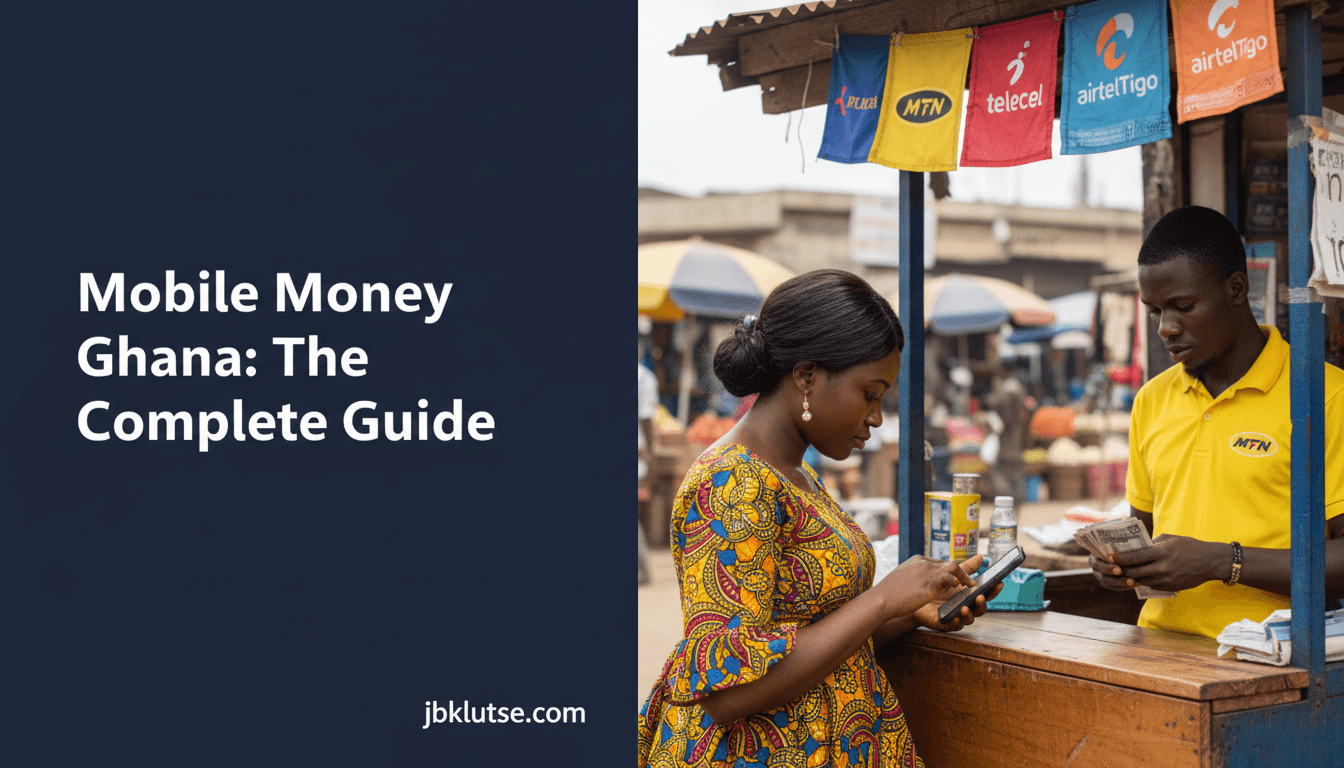
Mobile money (MoMo) is a telco-powered financial service that lets you store, send, and receive money using your phone number instead of a bank account. You load cash at an agent, send it via USSD or app, and the recipient cashes out or spends it directly. No bank branch required.
Ghana’s three main players are MTN Mobile Money (launched 2009), Telecel Cash (formerly Vodafone Cash, rebranded 2023), and AirtelTigo Money (merged entity, 2017). Together they processed 4.8 billion transactions worth GHS 1.1 trillion (April 2026) in 2025, per Bank of Ghana statistics published March 2026.
MoMo is not just peer-to-peer transfers. It powers bill payments (ECG, GWCL, DSTV), merchant checkout (Shoprite, Glovo, Bolt), loan disbursements (Fido, Branch, M-Kopa), savings products (Hubtel, Fido Savings), and even government tax collection via the Ghana Revenue Authority portal.
The Electronic Transfer Levy (E-Levy), introduced May 2022 and adjusted in 2023, charges 1% on cumulative daily sends exceeding GHS 100 (April 2026), with a minimum GHS 1 per transaction. That single policy cut transaction volumes by 22% in its first year, though volumes recovered to pre-levy levels by Q4 2025 as Ghanaians adapted sending behavior.
The State of Mobile Money and Fintech in Ghana
Market share (2025 data, Bank of Ghana)
| Provider | Active wallets | Transaction volume (GHS) | Market share |
|---|---|---|---|
| MTN MoMo | 12.2M | GHS 738B (April 2026) | 67% |
| Telecel Cash | 4.8M | GHS 264B (April 2026) | 24% |
| AirtelTigo Money | 1.2M | GHS 98B (April 2026) | 9% |
MTN’s dominance comes from agent density (42,000+ agents nationwide vs Telecel’s 18,000), aggressive USSD reliability, and early mover advantage. Telecel Cash’s 2023 rebranding under new Ghanaian ownership aimed to reclaim lost ground, dropping fees on cash-in transactions under GHS 500 (April 2026) to zero. AirtelTigo Money serves a niche rural and Northern Region base, with agent presence in 87% of Electoral Areas per their Q4 2025 report.
Loan app explosion
Mobile loans launched in Ghana in 2017 with Branch and Fido. By 2025, the Bank of Ghana licensed 22 digital lenders, though only 8 had disbursed over GHS 10 million (April 2026). Fido leads with GHS 680 million (April 2026) disbursed in 2025, followed by Branch (GHS 420M) and MTN Qwik Loan (GHS 310M).
Interest rates are brutal. Apps advertise “10% fee” but compound monthly. A GHS 100 (April 2026) loan with “10% monthly fee” costs GHS 110 after 30 days, GHS 121 after 60 days, and GHS 133.10 after 90 days if unpaid (effective APR 120%). Late fees add 5–8% per month on top. See our complete loan app comparison for payment schedules.
Digital banking pivot
Traditional banks lost GHS 4.2 billion (April 2026) in deposits to MoMo wallets in 2025, per PwC Ghana Banking Survey. Fintechs responded with interest-bearing MoMo wallets. Fido Savings offers 15% annual interest on balances over GHS 500 (April 2026), paid monthly. Hubtel Savings Vault pays 12% on locked 90-day deposits. Both are regulated by the Bank of Ghana under the Payment Systems Act, not the Banking Act, so deposits are not NDPC-insured up to GHS 6,000 (April 2026) like commercial bank accounts.
Fraud landscape
The Cyber Security Authority of Ghana recorded 18,400 MoMo fraud reports in 2025, up 34% year-on-year. SIM swap attacks accounted for 38% (fraudster ports your number to a new SIM, resets your MoMo PIN, drains wallet). Fake agent scams (fraudster poses as MoMo agent, asks for PIN) represented 29%. Phishing via fake USSD codes and WhatsApp messages accounted for 22%.
Estimated losses: GHS 42 million (April 2026) in 2025. MTN, Telecel, and AirtelTigo all launched biometric SIM registration in Q1 2026 to reduce SIM swap risk, but rollout is patchy outside Accra and Kumasi.
Explore the Complete Guide
MoMo Fees in Ghana: Complete Breakdown Across All Telcos , Compare what MTN, Telecel, and AirtelTigo charge for send, cash-out, bill pay, and merchant payment. Includes E-Levy calculations and fee-avoidance strategies for high-volume users.
Mobile Loans in Ghana: Every App Compared (2026) , Side-by-side rates, repayment terms, eligibility, and true cost breakdowns for Fido, Branch, MTN Qwik, Earnipay, Jumo, and M-Kopa. Real APR calculations included.
Best Fintech Apps in Ghana: Real Reviews for 2026 , Hubtel, Zeepay, Fido, Chipper Cash, Dash, and ExpressPay tested and ranked by speed, fees, and Ghana-specific features. Includes savings and investment app reviews.
How to Use Mobile Mobile Money in Ghana: Every Guide You Need , Step-by-step instructions for registration, cash-in, send, cash-out, PIN reset, merchant payments, bill payments, and agent troubleshooting. Covers MTN, Telecel, and AirtelTigo.
MoMo Fraud in Ghana: How to Spot Scams and Protect Yourself , Recognize SIM swap attacks, fake agent calls, phishing USSD codes, and romance scams. Includes what to do if your wallet is compromised and how to report fraud to telcos, police, and the Cyber Security Authority.
How to Choose the Right MoMo Provider for You
Your ideal provider depends on where you live, who you send money to, and what you use MoMo for beyond transfers.
For Accra, Kumasi, Takoradi, and major cities
Go MTN MoMo if you need guaranteed agent availability, instant merchant checkout at Shoprite or Game, and access to the widest loan and fintech ecosystem. MTN’s agent density in Greater Accra is 4x higher than Telecel’s. Fees are highest, but reliability and speed offset the cost.
Go Telecel Cash if you’re budget-conscious and mostly send under GHS 500 (April 2026). Telecel dropped cash-in fees to zero for amounts under GHS 500 in January 2026, and their send fees undercut MTN by GHS 0.50 to GHS 2 (April 2026) on the GHS 100–500 band. Agent availability in Accra and Kumasi is solid. Merchant acceptance lags MTN by about 30%.
For Northern Region, rural towns, and cross-border
Go AirtelTigo Money if you’re in Tamale, Bolgatanga, Wa, or any town where MTN and Telecel agents are scarce. AirtelTigo dominates rural Northern Region with 62% agent share per their Q4 2025 map. Their fees match Telecel’s, and cross-border send to Burkina Faso, Togo, and Nigeria via AirtelTigo AfricaOne is cheaper than MTN’s international wallet fees.
For savings and loans
MTN MoMo if you want access to MTN Qwik Loan (instant approval up to GHS 2,000 (April 2026) for eligible users). Telecel Cash if you want Telecel Microloans (lower rates, slower approval). Fido or Hubtel if you want interest-bearing savings wallets and app-based budgeting tools. Neither requires you to abandon your telco wallet; they link directly to your MTN or Telecel account.
See our complete how-to guide for registration steps and our fees hub for exact cost breakdowns.
Key Data and Comparisons
Send fees (April 2026, includes E-Levy where applicable)
| Amount sent | MTN MoMo | Telecel Cash | AirtelTigo Money | E-Levy (all) |
|---|---|---|---|---|
| GHS 1–100 (April 2026) | Free | Free | Free | GHS 0 (below daily threshold) |
| GHS 101–500 (April 2026) | GHS 3.50 (April 2026) | GHS 3.00 (April 2026) | GHS 3.00 (April 2026) | GHS 1.01–5.00 (April 2026) |
| GHS 501–1,000 (April 2026) | GHS 7.00 (April 2026) | GHS 6.00 (April 2026) | GHS 6.00 (April 2026) | GHS 5.01–10.00 (April 2026) |
| GHS 1,001–2,000 (April 2026) | GHS 12.00 (April 2026) | GHS 10.50 (April 2026) | GHS 10.50 (April 2026) | GHS 10.01–20.00 (April 2026) |
| GHS 2,001–5,000 (April 2026) | GHS 25.00 (April 2026) | GHS 22.00 (April 2026) | GHS 22.00 (April 2026) | GHS 20.01–50.00 (April 2026) |
| GHS 5,001–10,000 (April 2026) | GHS 45.00 (April 2026) | GHS 40.00 (April 2026) | GHS 40.00 (April 2026) | GHS 50.01–100.00 (April 2026) |
E-Levy is 1% of cumulative daily send amount above GHS 100 (April 2026), minimum GHS 1 per transaction. Example: You send GHS 150 (April 2026) twice in one day. First send costs provider fee + GHS 1.50 E-Levy. Second send costs provider fee + GHS 1.50 E-Levy.
Cash-out fees (April 2026)
| Amount | MTN MoMo | Telecel Cash | AirtelTigo Money |
|---|---|---|---|
| GHS 1–100 (April 2026) | GHS 1.00 (April 2026) | GHS 0.75 (April 2026) | GHS 0.75 (April 2026) |
| GHS 101–500 (April 2026) | GHS 3.50 (April 2026) | GHS 3.00 (April 2026) | GHS 3.00 (April 2026) |
| GHS 501–1,000 (April 2026) | GHS 7.00 (April 2026) | GHS 6.00 (April 2026) | GHS 6.00 (April 2026) |
| GHS 1,001–2,000 (April 2026) | GHS 12.00 (April 2026) | GHS 10.50 (April 2026) | GHS 10.50 (April 2026) |
| GHS 2,001–5,000 (April 2026) | GHS 25.00 (April 2026) | GHS 22.00 (April 2026) | GHS 22.00 (April 2026) |
Mobile loan rates (April 2026, top 3 apps)
| App | Max first loan | Interest rate | Repayment term | True APR |
|---|---|---|---|---|
| Fido | GHS 2,000 (April 2026) | 10% monthly | 30–90 days | 120% |
| Branch | GHS 1,500 (April 2026) | 12% monthly | 30–60 days | 144% |
| MTN Qwik | GHS 2,000 (April 2026) | 10% monthly | 30 days | 120% |
Full loan comparison, including M-Kopa, Jumo, and Earnipay, in our loans hub.
Common Mistakes to Avoid
1. Ignoring the E-Levy threshold
Many users still send multiple small amounts thinking they avoid the levy. The levy applies to cumulative daily sends, not per-transaction. Sending GHS 60 (April 2026) twice in one day (total GHS 120) triggers GHS 1.20 in E-Levy. Solution: Batch your sends. Send GHS 120 once instead of GHS 60 twice.
2. Using the wrong cash-out band
Cashing out GHS 501 (April 2026) costs GHS 7 on MTN. Cashing out GHS 499 twice costs GHS 3.50 × 2 = GHS 7. But splitting to GHS 400 + GHS 101 costs GHS 3.50 + GHS 3.50 = GHS 7. Solution: Cash out amounts that sit just below band thresholds. See our fees breakdown for optimal withdrawal amounts.
3. Taking a mobile loan for non-emergencies
A GHS 500 (April 2026) loan at 10% monthly fee costs GHS 50 in interest after 30 days. That same GHS 500 could earn GHS 6.25 in one month at Fido Savings (15% annual). Borrowing costs you GHS 56.25 vs saving. Solution: Only borrow for genuine emergencies. Compare rates in our loan guide.
4. Sharing your PIN with “agents”
No legitimate MoMo agent needs your PIN to complete a cash-in or cash-out. If someone asks for your PIN, it’s a scam. MTN, Telecel, and AirtelTigo all confirm this in their fraud prevention guides. Solution: Memorize “Agents never ask for PINs.” Report suspicious agents to your telco. See our fraud hub for red flags.
5. Not enabling transaction notifications
Many users disable SMS alerts to save airtime costs. This delays fraud detection. In 38% of SIM swap cases reported to the Cyber Security Authority in 2025, victims only discovered wallet drainage 24+ hours later. Solution: Enable SMS or app push notifications for every transaction. The GHS 0.05 (April 2026) SMS cost is cheaper than losing GHS 500.
6. Assuming all fintech apps are licensed
The Bank of Ghana lists 22 licensed digital lenders as of March 2026. At least 12 unlicensed apps operate in Ghana, mostly Chinese-owned, with interest rates exceeding 20% monthly and aggressive debt collection practices. Solution: Check the Bank of Ghana’s licensed lender list before downloading any loan app. Our fintech app reviews flag unlicensed operators.
7. Not linking MoMo to savings or investment apps
Your MoMo wallet earns 0% interest. Fido Savings pays 15% annual, Hubtel Savings Vault pays 12%. Transferring idle balances takes 60 seconds. Solution: Link your wallet to a savings app and auto-sweep balances over GHS 200 (April 2026). Full setup guide in our fintech apps hub.
FAQs About Mobile Money and Fintech in Ghana
What is the E-Levy and how much does it cost?
The Electronic Transfer Levy (E-Levy) is a 1% tax on mobile money sends, bank transfers, and merchant payments exceeding GHS 100 (April 2026) cumulative per day. Minimum charge is GHS 1 per transaction. If you send GHS 50 (April 2026) five times in one day (total GHS 250), you pay 1% of GHS 150 (the amount above GHS 100) = GHS 1.50 E-Levy, split across transactions. Receives are exempt. The levy applies to sends only.
Which MoMo provider has the lowest fees in Ghana?
Telecel Cash and AirtelTigo Money tie for lowest fees on most transaction bands. Telecel offers free cash-in under GHS 500 (April 2026) and undercuts MTN by GHS 0.50 to GHS 2.00 (April 2026) on sends between GHS 100 and GHS 5,000. MTN charges the highest fees but offers the widest agent network and fastest transaction speed. See exact fee tables in our fees hub.
How do I register for MTN MoMo, Telecel Cash, or AirtelTigo Money?
Visit any licensed agent with your Ghana Card (or passport/driver’s license if you’re a non-citizen). The agent registers you on the spot, links your phone number to your ID, and sets your initial PIN. Registration is free. MTN and Telecel also offer self-registration via USSD for existing subscribers, but you must visit an agent for ID verification within 7 days. Step-by-step guides: MTN MoMo registration, Telecel Cash registration.
Are mobile loans safe in Ghana?
Licensed mobile loan apps regulated by the Bank of Ghana are legal and relatively safe, but interest rates are extremely high (10–15% monthly, 120–180% APR). Unlicensed apps, mostly operated by foreign entities, charge even higher rates and use aggressive debt collection tactics including public shaming and contact list harassment. Only borrow from licensed lenders. Check the Bank of Ghana’s list or see our loan comparison.
What should I do if my MoMo wallet is hacked?
Immediately call your telco’s fraud hotline: MTN 100, Telecel 171, AirtelTigo 181. Request a PIN reset and account freeze. Report to the nearest police station and obtain a case number. File a complaint with the Cyber Security Authority at cert@csa.gov.gh. Document all transactions and messages. Telcos refund fraud losses on a case-by-case basis, but only if you report within 24 hours and can prove SIM swap or unauthorized access. Full fraud response guide in our security hub.
Can I send MoMo across different telcos?
Yes. All three telcos support interoperability. You can send from MTN MoMo to Telecel Cash or AirtelTigo Money and vice versa. Fees are the same as same-network sends, plus the E-Levy if applicable. The recipient’s telco processes the cash-out. Some agents refuse cross-network cash-outs due to liquidity issues, particularly in rural areas. Urban agents handle it routinely.
Which fintech app is best for saving money in Ghana?
Fido Savings pays the highest interest (15% annual, paid monthly) on balances over GHS 500 (April 2026). Hubtel Savings Vault pays 12% on locked 90-day deposits. Both link directly to your MoMo wallet. Neither is NDPC-insured like commercial bank deposits, so risk is higher if the platform fails. Fido is backed by EcoBank Ghana, reducing risk somewhat. Full app reviews in our fintech apps hub.
How do I avoid E-Levy charges?
You cannot avoid the E-Levy entirely if you send more than GHS 100 (April 2026) cumulative per day. Strategies to minimize it: batch sends (one GHS 500 send costs less total levy than five GHS 100 sends), use receives instead of sends where possible (receives are exempt), or use cash for amounts under GHS 500 when practical. The levy is mandatory on all electronic transfers. See our E-Levy explainer for detailed scenarios.
What is the difference between MoMo and a bank account?
MoMo is telco-operated, USSD or app-based, no branch required, no minimum balance, instant transfers. Bank accounts are bank-operated, branch or app-based, often require minimum balances, slower transfers, but deposits up to GHS 6,000 (April 2026) are NDPC-insured. MoMo wallets are regulated under the Payment Systems Act; deposits are not government-insured. MoMo is faster and more accessible for daily transactions. Banks are safer for long-term savings over GHS 10,000.
Can I use MoMo to pay for international services like Netflix or Amazon?
Not directly. MTN MoMo, Telecel Cash, and AirtelTigo Money do not issue international debit or credit cards. Solution: Link your MoMo wallet to Chipper Cash or Dash, which offer virtual USD cards funded from your cedi wallet. Alternatively, use Hubtel or Zeepay to buy virtual dollar cards. Conversion fees range from 2.5% to 4.5%. See our Zeepay review and Hubtel review for setup instructions.
Related Resources Across the Site
Master the topic
- MoMo Fees in Ghana: Complete Breakdown Across All Telcos
- Mobile Loans in Ghana: Every App Compared (2026)
- Best Fintech Apps in Ghana: Real Reviews for 2026
- How to Use Mobile Money in Ghana: Every Guide You Need
- MoMo Fraud in Ghana: How to Spot Scams and Protect Yourself
Popular deep-dives
- MTN MoMo Fees 2026: Complete Table
- Telecel Cash Fees 2026
- AirtelTigo Money Fees 2026
- Best Mobile Loan Apps in Ghana (2026)
- Fido Mobile Loan Review (Ghana)
- MTN Qwik Loan: Rates, Eligibility, Payback
- Hubtel: Features, Fees, and Real Use Cases
- Zeepay Review: Is It Worth Using in Ghana?
- E-Levy in Ghana: What It Is and What It Costs You
- Cheapest Way to Send Money in Ghana
- How to Register for MTN MoMo in Ghana
- How to Reset a Forgotten MoMo PIN
Closing
Mobile money in Ghana is no longer just a convenience. It is the financial system for 18 million people. Whether you’re comparing fees to cut costs, choosing a loan app that will not trap you in debt, securing your wallet against SIM swap fraud, or hunting for the fintech app that actually earns interest on your idle cedis, the decisions you make today shape your financial health tomorrow.
This guide is your starting point. Bookmark it. Return to the hubs when you need detail. Check back quarterly for updates as telcos adjust fees, new apps launch, and regulators tighten rules.
Follow our updates on X at @jbklutsemedia or subscribe to our weekly newsletter for telco fee changes, loan rate shifts, and fraud alerts the day they happen.
Sources
- Bank of Ghana. Payment Systems Statistics 2025. Published March 2026. https://www.bog.gov.gh
- MTN Ghana. Mobile Money Transaction Tariffs. Effective April 2026. https://www.mtn.com.gh/momo
- Telecel Ghana. Telecel Cash Fees Schedule. Updated January 2026. https://www.telecelghana.com/cash
- AirtelTigo Ghana. AirtelTigo Money Pricing. Reviewed April 2026. https://www.airteltigo.com.gh/money
- Cyber Security Authority of Ghana. 2025 Fraud Report: Mobile Money and Digital Financial Services. Published February 2026. https://www.csa.gov.gh
- PwC Ghana. Ghana Banking Survey 2025. Published January 2026. https://www.pwc.com/gh
- Government of Ghana. Electronic Transfer Levy Act, 2022 (Act 1075). Amended 2023. https://www.gra.gov.gh
- Bank of Ghana. List of Licensed Payment Service Providers. Updated March 2026. https://www.bog.gov.gh/supervision/licensed-institutions