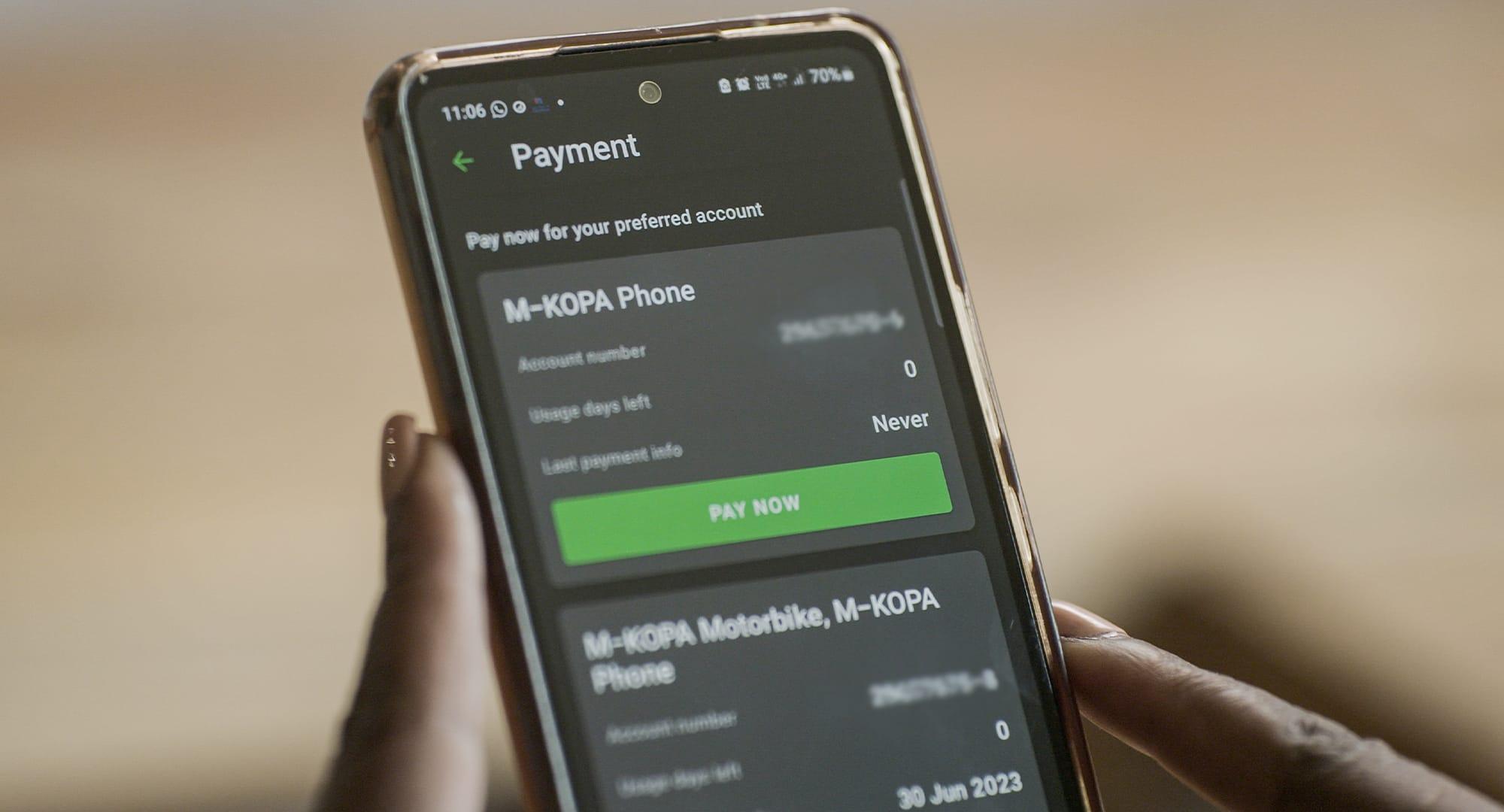
A Nairobi-based company called M-KOPA is quietly changing how Africans access credit, and the model could reach Ghana soon. Here’s what’s happening and why it matters for you.
The basic idea: Your phone becomes your credit score
M-KOPA sells smartphones on credit across Africa. When you buy a phone from them, you pay in small instalments over time—often daily via mobile money. The twist: every single repayment feeds into a credit profile built just for you.
In Ghana’s case, this matters because most people—especially outside cities—can’t get loans from banks. Banks want proof: a job letter, collateral, a bank statement. If you’re self-employed, a trader, or a farmer, you’re stuck.
M-KOPA’s approach sidesteps that. Instead of asking “Do you have a bank account?” they ask “Can you pay GHS 5 a day for your phone?” Thousands of Ghanaians already do exactly that with MTN data bundles or airtime.
From phones to cash loans: The bigger picture
Here’s where it gets interesting. After you’ve made, say, 30 days of repayments on a phone, M-KOPA knows something banks don’t: you’re reliable. You show up. You pay on time.
That’s when they offer you other things. A small cash loan. Insurance. More credit products. M-KOPA’s chief financial officer, Faraimose Kutadzaushe, told TechCabal: “When we are selling to our customer, we are not selling them a phone. We are selling them more than a phone.”
The numbers are big. M-KOPA has served nearly 10 million customers across Africa and lent out more than USD 2 billion (~GHS 22 billion at April 2026 rates). In Nigeria alone, it’s become one of their strongest markets.
Why this model works in Africa
The World Bank estimates that only about one-quarter of adults in low-income countries use formal credit. The rest borrow from family, friends, or loan sharks—often at brutal interest rates.
M-KOPA fills that gap using data, not paperwork. Each repayment is a data point. Fifty repayments? That’s a credit history. A hundred? M-KOPA can now forecast risk and price loans fairly.
Other African fintechs are doing similar things. Moniepoint, a Nigerian platform, uses payment data from small businesses to approve loans. In 2025, they handed out over ₦1 trillion (~USD 721 million) in credit based on transaction histories alone.
The risks and the real numbers
M-KOPA uses AI to manage risk and says its default rates sit between 10 and 12%—low for emerging markets. The company turned a profit of USD 9.2 million in 2024 after losing USD 24.7 million the year before, as revenue grew 66%.
But the model isn’t risk-free. If repayments slow, M-KOPA’s entire business model stalls. They’re also competing in crowded markets and need constant capital to lend.
What this means for Ghana
M-KOPA hasn’t publicly launched in Ghana yet, but the model is spreading across East and West Africa. If it arrives, Ghanaians could use smartphone repayments to build credit for small business loans, emergency cash, or other services—without a bank account or salary slip.
For informal traders, artisans, and farmers, this could unlock credit that banks won’t touch. But watch the terms: interest rates, fees, and what happens if you miss a payment.
What you should do
If M-KOPA launches in Ghana, compare it to MTN MoMo loans or other digital lenders you already use. The smartphone-first approach is new, but the credit is not. Read the terms carefully before signing up.
Keep an eye on fintech news from JBKlutse for updates on M-KOPA’s Ghana launch or similar models arriving here.


Leave a Reply