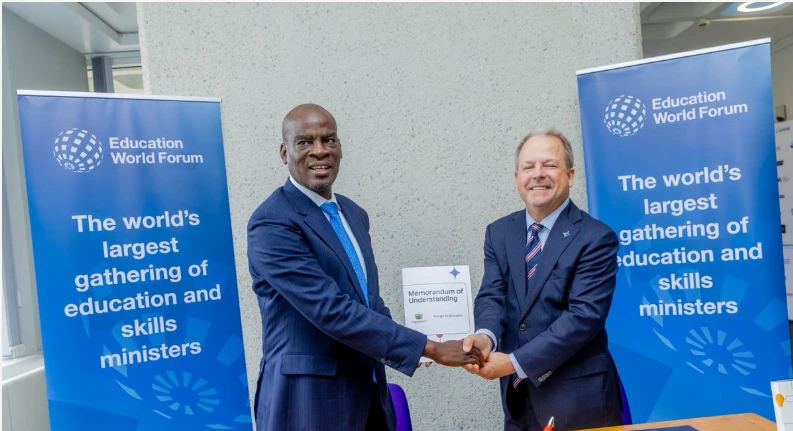
Ghana just signed a deal with Google to bring artificial intelligence and digital skills training into classrooms across the country. The Memorandum of Understanding was signed during the Education World Forum 2026 in London by Education Minister Haruna Iddrisu and Google for Education Global Managing Director Kelvin Kells.
Here’s what this means for you: if you’re a Ghanaian student, teacher, or parent, your school may soon have new AI-powered learning tools and technology training as part of the curriculum.
What the Google Ghana AI education partnership will do
The deal focuses on three main areas: improving how teachers use digital tools in classrooms, giving students technology skills they’ll need for future jobs, and building digital literacy across schools nationwide.
According to the Ministry of Education, the partnership aims to help educators “build skills in modern technology while supporting students with the critical skills needed for the future of work in an increasingly technology-driven world.”
The government framed this as part of a bigger push to make sure no Ghanaian child falls behind as the world becomes more digital.
The real challenge: Internet and electricity
Here’s the catch. Many schools in rural Ghana still don’t have reliable internet, steady electricity, or enough computers for students. If your school is outside a major city, rolling out AI tools might take longer.
According to the International Telecommunication Union, internet access across sub-Saharan Africa — including Ghana — is still well below global averages. UNESCO research shows many African schools struggle with poor connectivity and limited teaching resources, especially outside urban areas.
Education experts say that without fixing these basic infrastructure problems first, even a partnership with a tech giant like Google will struggle to work properly.
Why teachers matter most
The success of this partnership depends heavily on training teachers. Experts warn that having fancy AI tools in classrooms doesn’t help if teachers don’t know how to use them or don’t have time to learn.
The Ministry of Education says more details about teacher training programs and classroom rollout plans will be announced in the coming months. This is important to watch — teacher preparation will likely make or break whether this initiative actually improves learning.
What you should watch for
Keep an eye out for announcements from the Ministry of Education about when these programs actually start rolling out. Ask your child’s school if they’re part of the pilot program. If you’re an educator, watch for training opportunities that Google and the Ministry will likely announce soon.
The real test will be whether rural schools get the same support as urban ones, and whether teachers actually have time and resources to implement these tools properly.
Leave a Reply