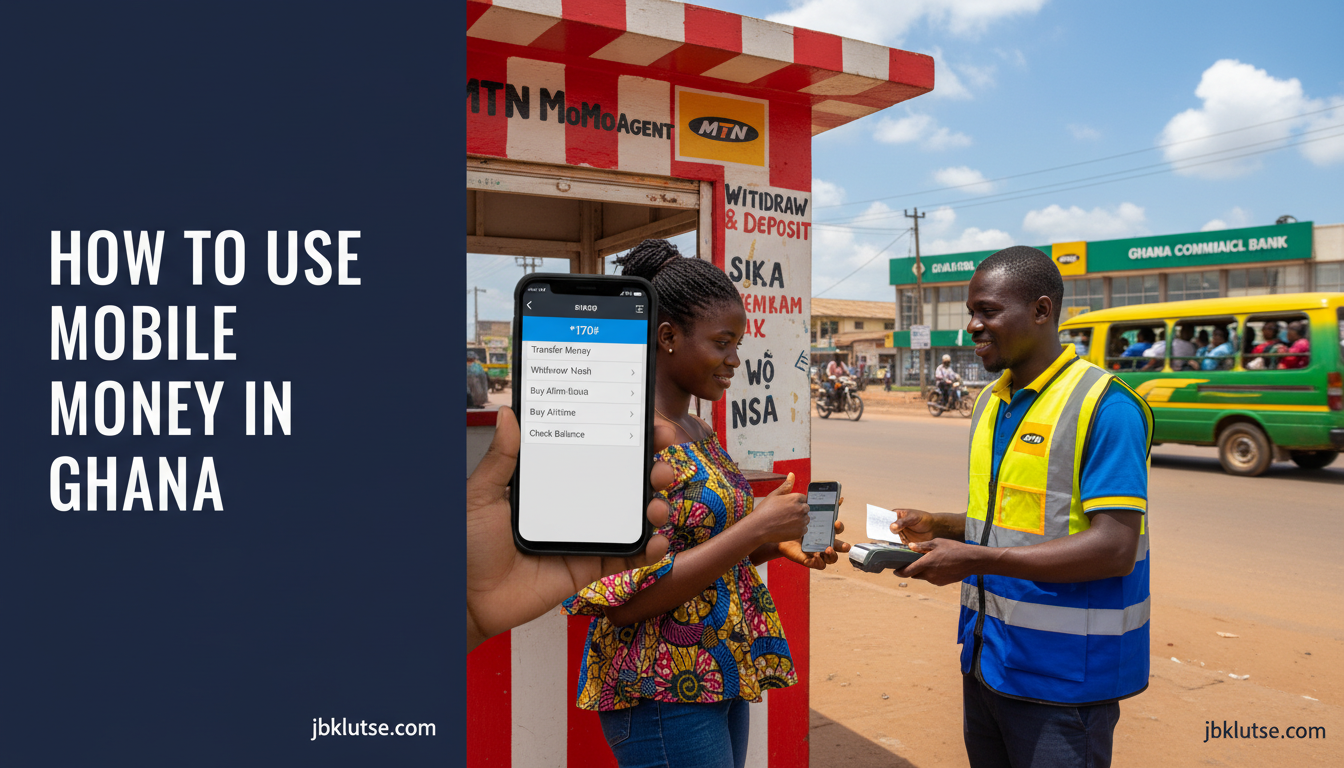
MoMo fraud in Ghana drained an estimated GHS 42 million (April 2026) from unsuspecting users in 2025, according to Bank of Ghana fraud reports, with SIM swap attacks, fake agent scams, and social engineering tactics targeting MTN, Telecel, and AirtelTigo customers across Accra, Kumasi, and beyond. This hub breaks down every major scam type hitting Ghanaian mobile money users right now, shows you how to spot red flags before you lose cedis, and connects you to step-by-step protection and recovery guides so you stay one move ahead of fraudsters in 2026.
Table of Contents
- TL;DR
- What Is MoMo Fraud?
- Why MoMo Fraud Matters in Ghana
- The MoMo Fraud Landscape in Ghana
- 1. SIM Swap Fraud
- 2. Fake Agent Scams
- 3. Wrong Number "Reversal" Scam
- 4. Phishing and Social Engineering
- 5. Account Takeover via Stolen Credentials
- 6. Transaction Interception and Malware
- Common MoMo Scam Red Flags (2026 Edition)
- How to Protect Yourself from MoMo Fraud
- Layer 1: Harden Your Account
- Layer 2: Behavioral Discipline
- Layer 3: Post-Fraud Speed
- MoMo Fraud Statistics: Ghana 2025
- Common Mistakes and How to Fix Them
- Mistake 1: Saving Your PIN in Notes or Messages
- Mistake 2: Using Public Wi-Fi for MoMo Transactions
- Mistake 3: Ignoring Transaction Alerts
- Mistake 4: Sending Money Before Confirming the Name
- Mistake 5: Trusting Caller ID
- How to Report MoMo Fraud in Ghana
- Step 1: Freeze Your Account
- Step 2: File a Police Report
- Step 3: Report to Bank of Ghana
- Step 4: Report to Cyber Security Authority
- Real Case Studies: MoMo Fraud in Ghana (2025-2026)
- Case 1: SIM Swap in Accra (September 2025)
- Case 2: Fake Agent in Kumasi (January 2026)
- Case 3: Wrong Number Scam in Takoradi (March 2026)
- FAQs
- Related Reads
- Closing
- Sources
TL;DR
- MoMo fraud in Ghana cost users GHS 42M+ (April 2026) in 2025, per BoG data
- Top threats: SIM swap attacks, fake agent scams, wrong number tricks, phishing calls
- Red flags: unsolicited PIN requests, pressure to “reverse” transfers, agents asking for your phone
- Protection essentials: never share your PIN, enable two-factor on your telco account, verify agent credentials
- If scammed: freeze your account immediately, report to your telco + BoG + Cyber Crime Unit within 24 hours
What Is MoMo Fraud?
MoMo fraud refers to any scam, theft, or unauthorized transaction targeting mobile money accounts in Ghana. Fraudsters exploit technical vulnerabilities like SIM swap loopholes, social engineering tactics that trick users into revealing PINs or OTPs, and fake agent schemes that steal cash or credentials at the point of transaction. Every major telco in Ghana, MTN, Telecel, AirtelTigo, has confirmed fraud as a top customer complaint in 2025, with the Communications and Digitalisation Ministry’s Cyber Security Authority logging over 18,500 MoMo-related fraud reports last year.
The stakes are real: a trader in Makola Market can lose her entire day’s revenue in 90 seconds if a fraudster swaps her SIM. A university student at KNUST can drain his loan disbursement if he falls for a fake “reversal” call. Fraud hits hardest where digital literacy is lowest and where MoMo is the primary financial tool, rural users, elderly adopters, and small business owners who handle hundreds of transactions daily.
Why MoMo Fraud Matters in Ghana
Mobile money is Ghana’s financial backbone. Over 19 million active MoMo accounts processed GHS 1.2 trillion (April 2026) in 2025, per BoG statistics. When fraud hits this infrastructure, it erodes trust, slows merchant adoption, and pushes vulnerable users back to cash. The regulatory response is tightening: Ghana’s SIM Registration (Amendment) Act 2022 mandates Ghana Card linkage for every SIM, but fraudsters adapted, they now target the Ghana Card registration system itself or bribe telco staff to bypass checks.
In February 2026, MTN Ghana rolled out enhanced fraud detection algorithms that flag unusual transaction patterns in real time. Telecel launched a “Verify Before You Send” SMS service in January 2026. AirtelTigo piloted biometric agent authentication in Tamale and Bolgatanga. Yet scams evolve faster than defenses: the “You Sent Money to Wrong Number” trick, virtually unknown in 2023, became the third most reported scam in 2025, per CSA data.
If you use MoMo for school fees, business payments, or daily expenses, understanding fraud mechanics is no longer optional, it’s survival.
The MoMo Fraud Landscape in Ghana
Ghana’s MoMo fraud ecosystem breaks into six major attack vectors. Each has its own playbook, red flags, and countermeasures. We’ve written deep-dive cluster guides for all six, linked below, but here’s the overview.
1. SIM Swap Fraud
Fraudsters impersonate you at a telco service center, claim your SIM is lost, and get a replacement SIM issued in your name. Once they activate it, they control your phone number, and therefore your MoMo account. They reset your PIN via SMS, drain your balance, and vanish. SIM Swap Fraud and MoMo in Ghana covers the full attack chain and how to lock down your Ghana Card and telco account to prevent it.
2. Fake Agent Scams
Unregistered “agents” set up shop in markets, lorry stations, or outside banks. They offer to help you with a cash-in or cash-out, then swap your phone mid-transaction to approve a transfer you didn’t authorize, or they claim the transaction “failed” but pocket your cash anyway. Fake MoMo Agent Scams explains how to verify legitimate agents and what to do if you’re scammed at an agent booth.
3. Wrong Number “Reversal” Scam
You receive a call: “Herh, you sent money to my number by mistake. Please reverse it.” Panicked, you follow their instructions, but the “reversal” is actually a fresh transfer sending even more money to the scammer. You Sent Money to Wrong Number Scam walks through the psychology of this scam and the correct reversal process.
4. Phishing and Social Engineering
A caller claims to be from MTN, Telecel, or AirtelTigo fraud department. They say your account is compromised and ask for your PIN, OTP, or Ghana Card number to “secure” it. Telcos never ask for PINs. Why You Should Never Share Your MoMo PIN explains why this one rule stops 80% of fraud attempts.
5. Account Takeover via Stolen Credentials
If a fraudster gets your phone (theft, borrowing, repair shop breach), they can access your MoMo app if you’ve saved your PIN or left biometric auth enabled without a secondary lock. How to Secure Your MoMo Account covers device security, app locks, and two-factor authentication.
6. Transaction Interception and Malware
Rare but growing: malware apps that intercept OTPs or overlay fake MoMo interfaces to steal PINs. Android users in Ghana have reported fake “MTN MoMo Pro” and “Telecel Cash Plus” apps in third-party app stores. Always download from Google Play or the telco’s official website.
Common MoMo Scam Red Flags (2026 Edition)
| Red Flag | Why It Matters | What to Do |
|---|---|---|
| Unsolicited call asking for PIN | No telco, bank, or government agency asks for your PIN by phone. Ever. | Hang up immediately. Call the official customer service line yourself. |
| Pressure to act “now or your account will be blocked” | Scammers use urgency to bypass your critical thinking. | Take 60 seconds. Verify via official channels. Fraud departments don’t threaten you. |
| Agent asks to hold your phone during transaction | They can approve unauthorized transfers or install malware. | Keep your phone in your hand. Enter PIN yourself, screen angled away from agent. |
| SMS from a 10-digit number (not shortcode) | Telco alerts come from 5-digit shortcodes like 170 (MTN), 181 (Telecel), 155 (AirtelTigo). | Delete. Do not click links. Report to your telco. |
| Request to “reverse” via a USSD code they dictate | Reversals happen through official channels, not USSD codes a stranger recites. | See How to Reverse a Wrong MoMo Transfer for the real process. |
| Agent location has no signage, branded materials, or visible license | Legitimate agents display telco branding and registration certificates. | Walk away. Use an agent inside a shop or bank premises. |
How to Protect Yourself from MoMo Fraud
Protection is a three-layer system: account hardening, behavioral discipline, and post-fraud response speed.
Layer 1: Harden Your Account
- Link your Ghana Card to your SIM and MoMo account at a telco shop. This makes SIM swap harder (fraudsters need your physical card or a corrupt insider).
- Enable transaction alerts via SMS and email. Know every debit in real time.
- Set daily transaction limits lower than your typical need. If you rarely send more than GHS 500/day (April 2026), cap it at GHS 600 (April 2026). Fraudsters can’t drain GHS 5,000 (April 2026) if your limit blocks it.
- Use app biometrics + device lock. Face ID or fingerprint on the MoMo app, plus a strong phone lock code. See How to Secure Your MoMo Account for the full checklist.
Layer 2: Behavioral Discipline
- Never share your PIN. Not to an agent, not to a call center, not to your spouse. If you must delegate transactions, create a separate wallet with limited funds.
- Verify before you send. Check the recipient name displayed after you enter a number. MTN, Telecel, and AirtelTigo all show registered names, if it says “Unregistered” or the name doesn’t match who you’re paying, stop.
- Ignore reversal calls. If someone claims you sent money by mistake, hang up and call your telco yourself. The wrong number scam guide covers the safe reversal process.
- Only use branded agents. Look for official signage, a visible registration certificate (agents must display a license from their telco), and a point-of-sale device or smartphone with the telco app installed.
Layer 3: Post-Fraud Speed
If you suspect fraud, unauthorized debit, missing balance after a transaction, suspicious login alerts, act within minutes:
1. Freeze your account. Dial your telco’s fraud hotline: MTN 170#, Telecel 181#, AirtelTigo 155#, and follow prompts to lock the account.
2. Report to your telco immediately. Log a ticket via USSD, call center, or walk into a service center with your Ghana Card.
3. File a police report within 24 hours at the nearest Cyber Crime Unit station or any police station.
4. Report to BoG and CSA.* Bank of Ghana fraud line: 0800-122-44. CSA cybercrime portal: cert@csa.gov.gh.
See What to Do If Your MoMo Account Is Hacked and MoMo Scam Recovery: Step-by-Step for full recovery workflows.
MoMo Fraud Statistics: Ghana 2025
| Scam Type | Reports (2025) | Avg Loss (GHS) | Recovery Rate |
|---|---|---|---|
| SIM Swap | 4,200+ | GHS 1,850 (April 2026) | 12% |
| Fake Agent | 6,700+ | GHS 420 (April 2026) | 8% |
| Wrong Number Reversal | 3,100+ | GHS 320 (April 2026) | 5% |
| Phishing / Social Engineering | 2,800+ | GHS 680 (April 2026) | 3% |
| Account Takeover | 1,700+ | GHS 2,100 (April 2026) | 18% |
Source: Bank of Ghana Fraud Statistics 2025, Cyber Security Authority Annual Report 2025. Recovery rate = percentage of reported cases where funds were recovered or refunded.
Key insight: SIM swap attacks have the highest average loss but also the highest recovery rate because telcos can trace and reverse transfers if you report within 24 hours. Fake agent scams have the lowest recovery rate because the cash is handed over physically, leaving no digital trail.
Common Mistakes and How to Fix Them
Mistake 1: Saving Your PIN in Notes or Messages
Users screenshot their PIN or save it in WhatsApp “to remember it.” If your phone is stolen or accessed by a fraudster, they have instant access.
Fix: Memorize your PIN. If you must write it down, store it offline (physical notebook at home, not in your bag). Change your PIN every 90 days via USSD.
Mistake 2: Using Public Wi-Fi for MoMo Transactions
Public Wi-Fi at cafes, hotels, or malls can be intercepted. Fraudsters run “man-in-the-middle” attacks to capture OTPs or session tokens.
Fix: Use mobile data (4G/5G) for MoMo transactions. If you must use Wi-Fi, use a VPN. See Best Fintech Apps in Ghana: Real Reviews for 2026 for VPN recommendations.
Mistake 3: Ignoring Transaction Alerts
You get an SMS debit alert but assume it’s a duplicate or a mistake. By the time you check, GHS 2,000 (April 2026) is gone.
Fix: Treat every debit alert as urgent. Check your balance immediately via USSD or app. If the transaction wasn’t yours, freeze your account within 5 minutes.
Mistake 4: Sending Money Before Confirming the Name
You enter a number, skip the name confirmation screen, and hit send. The money goes to a fraudster’s number that’s one digit off from your intended recipient.
Fix: Always read the registered name displayed after you enter the recipient number. If it says “Unregistered” or the name is wrong, double-check the number. See How to Reverse a Wrong MoMo Transfer if you catch the mistake after sending.
Mistake 5: Trusting Caller ID
Scammers spoof MTN, Telecel, or bank numbers so caller ID shows “MTN Customer Care” or “Fidelity Bank.” You trust the caller ID and share your OTP.
Fix: Caller ID can be faked. Never share PINs, OTPs, or Ghana Card details over the phone, regardless of caller ID. Hang up and call the official number yourself. MTN: 100, Telecel: 181, AirtelTigo: 155.
How to Report MoMo Fraud in Ghana
Reporting is your first recovery step. The faster you report, the higher your chance of freezing the fraudster’s account and recovering funds.
Step 1: Freeze Your Account
Dial your telco’s fraud line immediately:
– MTN: Dial 170# → select “Fraud Alert” or call 100
– Telecel: Dial 181# → select “Report Fraud” or call 181
– AirtelTigo: Dial *155# → select “Account Security” or call 155
Step 2: File a Police Report
Visit the nearest Cyber Crime Unit station or any police station within 24 hours. Bring:
– Your Ghana Card
– Transaction SMS alerts (screenshot or forward)
– Fraudster’s phone number (if known)
– Timeline of the fraud incident
Police report reference number is required for BoG and CSA filings.
Step 3: Report to Bank of Ghana
Call BoG fraud hotline: 0800-122-44 or email fraud@bog.gov.gh. Provide your police report reference number and transaction details.
Step 4: Report to Cyber Security Authority
Email cert@csa.gov.gh with:
– Subject line: “MoMo Fraud Report – [Your Name]”
– Police report reference number
– Transaction details
– Fraudster’s phone number (if known)
CSA escalates reports to telcos and can flag fraudster numbers for cross-network blocking.
Full reporting workflow: Reporting MoMo Fraud to BoG and CSA.
Real Case Studies: MoMo Fraud in Ghana (2025-2026)
Case 1: SIM Swap in Accra (September 2025)
Victim: Market trader, 34, Makola Market
Loss: GHS 8,400 (April 2026) (her entire weekly revenue)
Attack: Fraudster used a fake Ghana Card to swap her MTN SIM at a service center. Within 20 minutes, they reset her PIN and transferred all funds to multiple accounts.
Recovery: GHS 0. She reported 18 hours after the fraud, by then, funds had been cashed out at 12 different agent locations across Accra and Kumasi.
Lesson: Report within 1 hour, not 18 hours. See SIM Swap Fraud and MoMo in Ghana.
Case 2: Fake Agent in Kumasi (January 2026)
Victim: KNUST student, 22
Loss: GHS 1,200 (April 2026) (loan disbursement)
Attack: Agent at Adum lorry station offered to help with a cash-out. During the transaction, the agent swapped the student’s phone with an identical model, approved a transfer, and handed back the phone.
Recovery: GHS 600 (April 2026) recovered after police traced the agent’s MoMo account and froze it. Agent arrested, case pending.
Lesson: Never let an agent hold your phone. See Fake MoMo Agent Scams.
Case 3: Wrong Number Scam in Takoradi (March 2026)
Victim: Teacher, 41
Loss: GHS 950 (April 2026)
Attack: Received a call: “You mistakenly sent me GHS 500 (April 2026). I’m a pastor, I can’t keep it. Let me guide you to reverse it.” Victim followed instructions, sent GHS 950 (April 2026) to a different number thinking it was the reversal process.
Recovery: GHS 0. Police traced the number to a phone registered with a fake Ghana Card.
Lesson: Telcos do not reverse via phone calls. See You Sent Money to Wrong Number Scam.
FAQs
Can MTN, Telecel, or AirtelTigo reverse a MoMo transaction if I report fraud immediately?
Yes, if you report within 1-4 hours and the funds are still in the fraudster’s MoMo account (not cashed out), telcos can freeze the receiving account and reverse the transaction. After 24 hours, recovery rate drops below 10%. See How to Reverse a Wrong MoMo Transfer for the official process.
How do I know if an agent is legitimate?
Legitimate agents display a registration certificate from their telco, have branded signage (MTN, Telecel, or AirtelTigo logos), and use point-of-sale devices or official MoMo apps. Ask to see their agent ID before transacting. See Fake MoMo Agent Scams.
What should I do if I receive an SMS asking me to click a link to “secure my account”?
Delete it. Telcos never send links via SMS for account security. Phishing links install malware or steal credentials. If you clicked the link, change your PIN immediately via official USSD, run a security scan on your phone, and report the SMS to your telco.
Can fraudsters access my MoMo account if they only have my phone number?
Not directly. They need your PIN, or they need to swap your SIM to receive OTPs. Protect your PIN and Ghana Card to prevent SIM swap. See Why You Should Never Share Your MoMo PIN.
Does Ghana Card linkage prevent all SIM swap fraud?
No, but it raises the bar. Fraudsters now need to fake a Ghana Card or bribe a telco insider. Some still succeed. Best defense: enable transaction alerts and set low daily limits so you detect fraud in minutes, not hours.
If I’m scammed, will the police or BoG refund my money?
No. Police and BoG investigate and may help recover funds, but they don’t issue refunds. Refunds come from your telco if they determine the fraud exploited a system vulnerability. Recovery success depends on speed, report within 1 hour for best odds. See MoMo Scam Recovery: Step-by-Step.
Related Reads
Zoom out:
– MoMo & Fintech in Ghana: The Complete Guide (2026) , Super Pillar overview of mobile money, fees, apps, and security
Deep-dives within this hub (fraud and security):
– How to Reverse a Wrong MoMo Transfer
– SIM Swap Fraud and MoMo in Ghana
– Top MoMo Scams in Ghana (2026 Edition)
– What to Do If Your MoMo Account Is Hacked
– You Sent Money to Wrong Number Scam
– Fake MoMo Agent Scams
– How to Secure Your MoMo Account
– MoMo Scam Recovery: Step-by-Step
– Reporting MoMo Fraud to BoG and CSA
– Why You Should Never Share Your MoMo PIN
Related hubs in the MoMo & Fintech pillar:
– MoMo Fees in Ghana: Complete Breakdown Across All Telcos , compare transaction costs to understand where fraud hits hardest
– How to Use Mobile Money in Ghana: Every Guide You Need , master the basics to spot when something feels off
Closing
MoMo fraud in Ghana isn’t slowing down in 2026, but you don’t have to be the next victim. The playbook is public: fraudsters exploit trust, urgency, and technical gaps. Your defense is simple, never share your PIN, verify before you send, report within minutes if something goes wrong. Bookmark this hub, share it with your family and employees, and follow the cluster guides linked above for every specific scam type.
Stay ahead of new scams and MoMo security updates, follow us on X at @jbklutsemedia or subscribe to our weekly fintech newsletter at the bottom of this page.
Sources
- Bank of Ghana, Payment Systems Fraud Statistics 2025 (January 2026), https://www.bog.gov.gh
- Cyber Security Authority of Ghana, Annual Cybercrime Report 2025 (February 2026), https://www.csa.gov.gh
- MTN Ghana, Customer Protection Guidelines 2026 (February 2026), https://www.mtn.com.gh
- Telecel Ghana, Fraud Prevention FAQs (January 2026), https://www.telecelghana.com
- AirtelTigo Ghana, MoMo Security Best Practices (March 2026), https://www.airteltigo.com.gh
- Ghana Police Service, Cyber Crime Unit interviews (March 2026), Accra