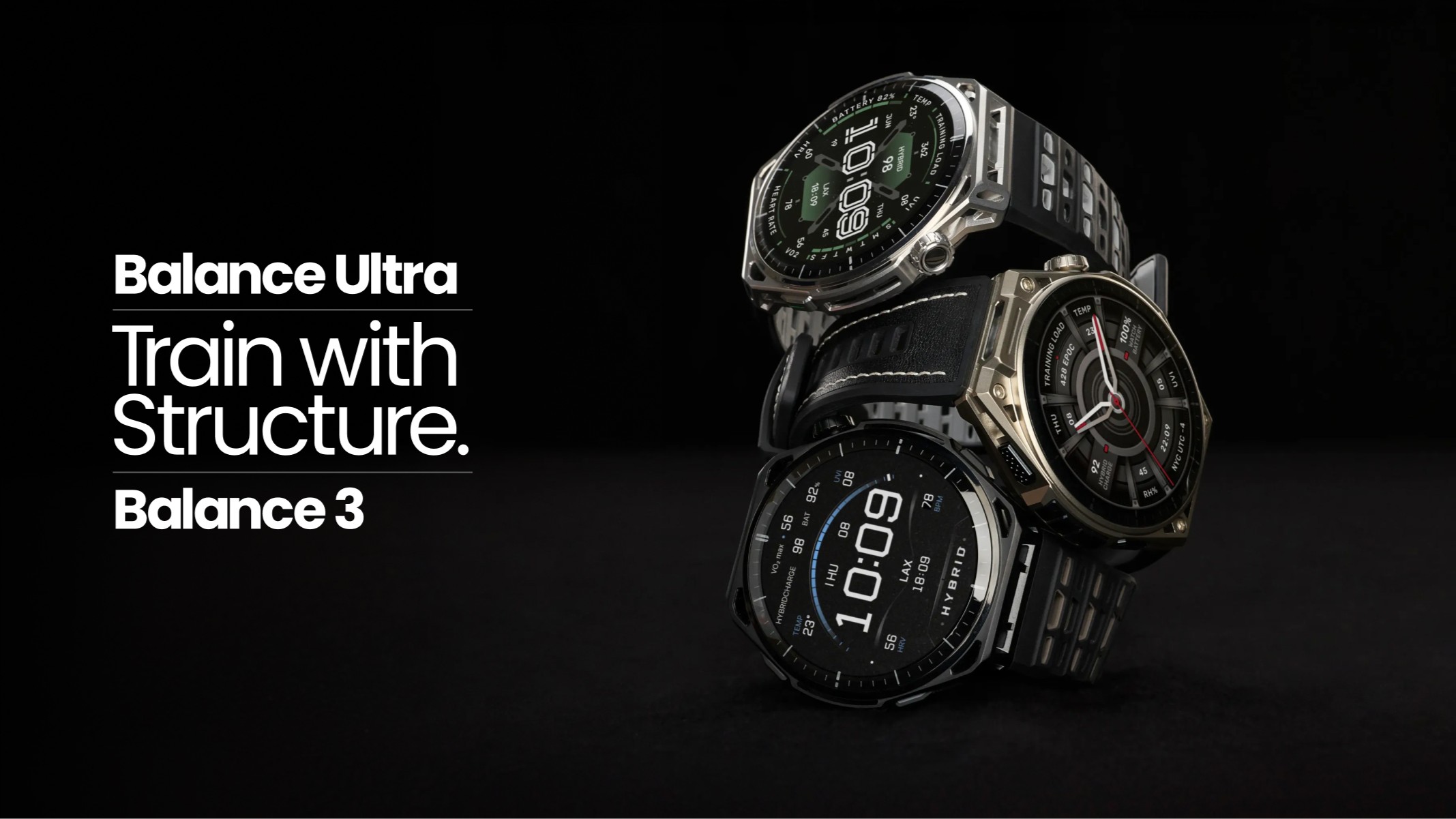
Amazfit has announced two new smartwatches aimed at serious athletes who want their watch to do more than just count steps—they want guidance on when to push hard and when to rest. The Balance 3 and Balance Ultra could potentially reach Ghana’s growing fitness gadget market through import channels.
Table of Contents
What’s the big idea?
Most fitness watches dump a ton of data on you: calories, heart rate, sleep, stress, workout metrics. The problem? Athletes often don’t know what to do with all that information.
Amazfit’s answer is something called the Hybrid Training System. It takes all that raw data—your workouts, sleep, stress levels, daily activity—and combines it into one picture. Then it tells you something more useful: should you go hard at the gym today, or should you rest and recover?
The watches use metrics with names like “BioCharge” and “LifeLoad” to estimate your energy and readiness. The Zepp app (which syncs to your phone) then gives you personalized training plans and weekly focus areas that adapt as your fitness changes.
What’s the hardware like?
Both watches are built solid. You get a 1.5-inch screen that’s bright enough to read in sunlight, dual GPS systems, and the ability to recognize 25 different strength exercises automatically. There’s also Bluetooth calling, offline maps, and voice controls if you want to record notes during a run.
The big difference between the two models is battery life and materials. The Balance 3 lasts up to 21 days on a charge. The Balance Ultra, built from premium Grade 5 titanium, stretches that to 30 days.
Pricing
The Amazfit Balance 3 starts at USD 370 for the stainless steel version, with a titanium option coming soon at USD 450. If you want the premium Grade 5 titanium Balance Ultra, that’s USD 600.
For context, these are premium-priced fitness watches globally. If you’re serious about running, CrossFit, or mixed training events, the price sits in line with what other high-end fitness watches cost internationally.
Is it for you?
These watches are built for dedicated athletes—people training for specific events or juggling multiple sports (running, strength training, recovery sessions). If you just want to count steps and check notifications, you don’t need this.
But if you’re a gym regular, a marathon runner, or someone training for a specific fitness challenge, the Hybrid Training System’s guidance on recovery and readiness could actually be useful. The auto-detection of exercises also saves you from manually logging every workout.
You can buy them directly from Amazfit’s website, though international shipping would be required to bring them to Ghana.


Leave a Reply