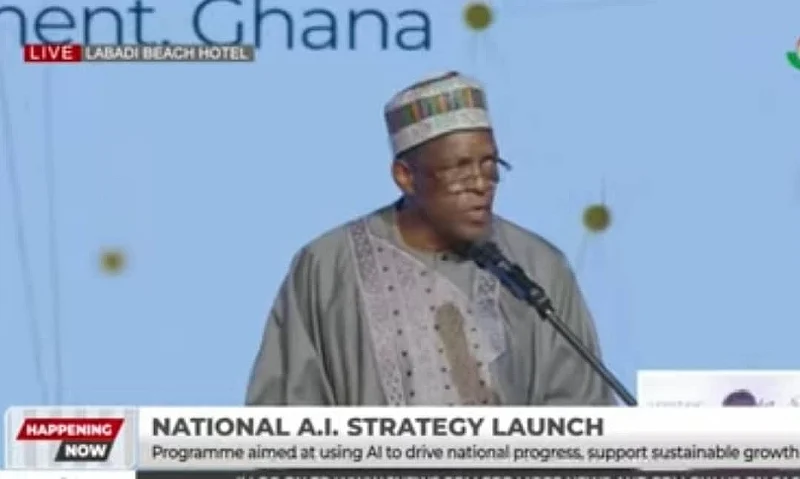
Ghana officially launched its National AI Strategy on April 24, 2026. Speaker of Parliament Alban Bagbin chaired the event and made clear: Ghana wants AI to grow the economy, but not at the cost of fairness, privacy, or jobs for everyday people.
If you use mobile money, apply for jobs online, or access government services digitally, this strategy will shape how those systems use AI in the next few years.
What is the Ghana National AI Strategy?
It’s the government’s official plan for how Ghana will adopt artificial intelligence (AI) — the technology behind things like ChatGPT, fraud detection in MoMo, and automated customer service.
The strategy sets rules and goals so AI helps Ghanaians instead of harming them. Think of it as the playbook for AI in banking, healthcare, education, farming, and government services.
Why Speaker Bagbin says ethics matter
Bagbin warned that without proper controls, AI could deepen inequality, invade privacy, and hurt trust in institutions. He called the strategy “a social contract,” not just a tech document.
“Technological progress must never come at the expense of human progress,” he said. That means no AI system should lock out rural communities, youth, or people with disabilities.
Parliament will now draft laws to regulate how companies and government agencies use AI. The goal: protect your data, keep hiring fair, and stop AI from being a “black box” that makes decisions no one can explain.
What this means for fintech and digital services
Ghana’s fintech companies — the ones behind mobile money, digital loans, and payment apps — will face new rules on how they use AI.
Expect requirements around:
- Loan decisions: If an AI denies your loan, you may soon have the right to know why.
- Fraud detection: Banks and MoMo providers already use AI to flag suspicious transactions. New rules will likely demand they explain how those systems work and give you a way to appeal if you’re wrongly blocked.
- Customer data: Stricter limits on how your transaction history, location, or phone contacts are used to train AI models.
For startups, this creates both opportunity and friction. If you’re building AI tools (chatbots, credit scoring, delivery routing), you’ll need to design for transparency and fairness from day one. Ghana is signaling it won’t accept “move fast and break things” if what breaks is people’s livelihoods.
Jobs, farming, healthcare: the promised benefits
Bagbin framed AI as a tool to solve real problems: better crop yields through AI-driven weather forecasting, faster diagnosis in clinics, personalized learning in schools, and new tech jobs.
Whether those benefits reach you depends on execution. The strategy is a plan, not a guarantee. Watch for pilot programs in the next 12 months, especially in agriculture (where Ghana has strong mobile penetration and a large farming workforce) and education.
What to watch next
Parliament will begin drafting AI regulation laws in the coming months. Civil society groups and tech associations will push for input. If you work in tech, fintech, or digital services, now is the time to follow those consultations.
For everyone else: stay alert to how AI shows up in the services you use. If a government portal, bank app, or delivery platform starts making automated decisions that affect you, you should soon have clearer rights to challenge them.
Ghana is trying to lead Africa on responsible AI. Whether it succeeds depends on how well it turns this strategy into laws with teeth and programs that work beyond Accra.
Source: Modern Ghana



Leave a Reply