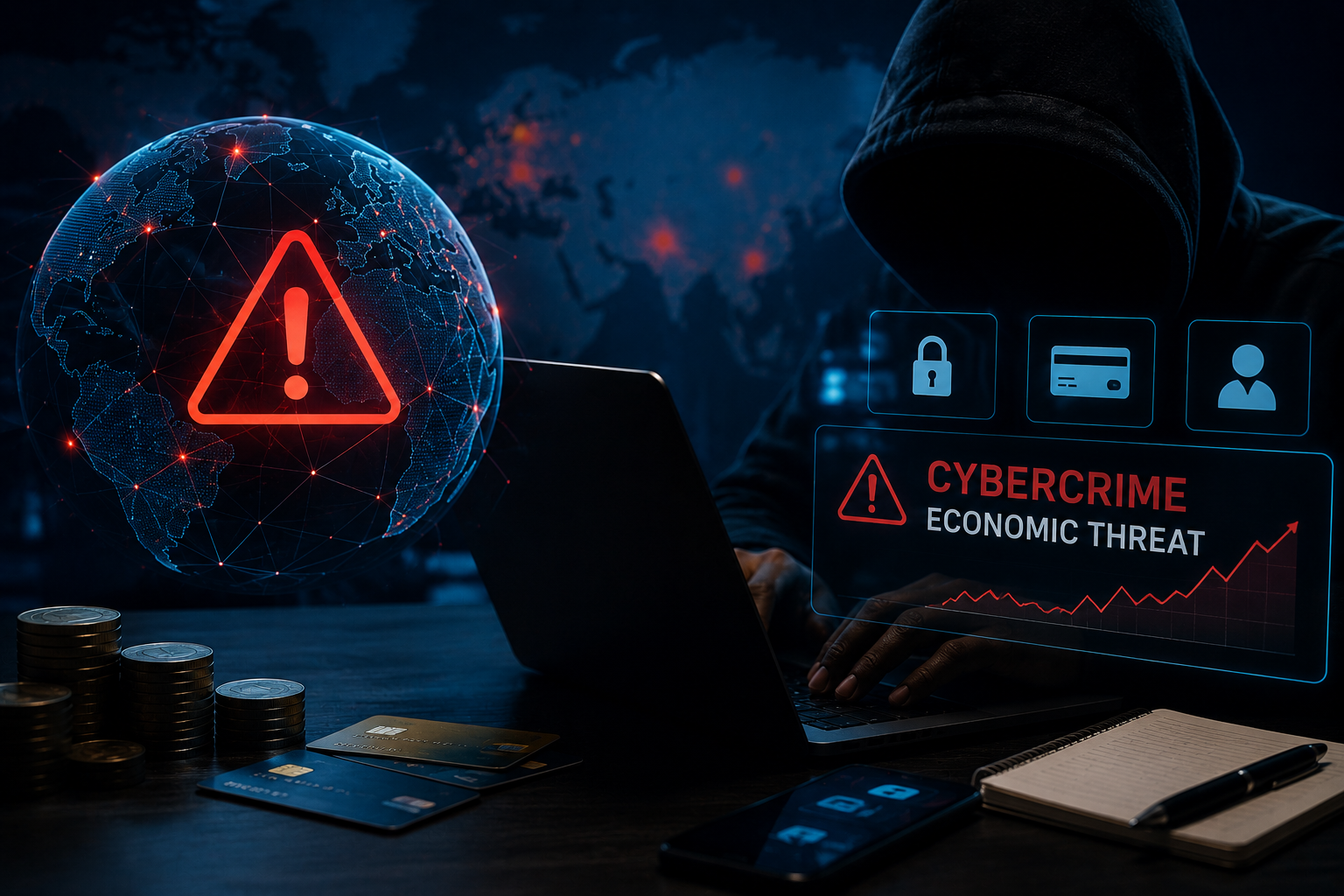
Cybercrime is now one of the world’s biggest economic threats, according to the founder of Ghana’s e-Crime Bureau. The warning matters for you: if you bank online, use MTN MoMo, or have a Ghana Card, you’re a target.
The e-Crime Bureau founder’s assessment reflects a growing concern across Africa. Cybercriminals steal money, personal data, and business secrets — and for Ghana, where mobile money and digital banking are growing fast, the risk is real and rising.
What cybercrime costs the world (and Ghana)
Cybercrime doesn’t just hurt individuals. It damages entire economies. The impact can be severe: disrupted services, lost customer data, and frozen accounts. For businesses and governments, the economic toll continues to grow.
For Ghanaians, the hit is closer to home. A phishing text that looks like it’s from your bank. A fake link promising free airtime. A scammer impersonating a friend on WhatsApp, asking you to send GHS urgently. These aren’t abstract threats—they happen daily in Ghana.
How cybercriminals target you
Phishing: You get a message or email that looks like it’s from your bank or MoMo provider. It asks you to click a link or enter your PIN. The link is fake. Once you do, they have your login details and can drain your account.
Identity theft: Criminals collect your personal info (name, phone number, Ghana Card details, address) from data breaches, public records, or by tricking you. They then open accounts in your name, take out loans, or sell your data.
MoMo fraud: Scammers text you pretending to be MoMo support, saying your account is locked or needs verification. They ask you to send money to “unlock” it. Or they pose as someone selling goods and ask you to pay first, then disappear.
How to protect yourself
Never click links in unsolicited texts or emails. If your bank says your account is locked, go to the bank’s real website or call them directly. Don’t use the number or link from the message.
Don’t share your PIN, password, or OTP (one-time password) with anyone. Not your bank. Not your telco. Not your family. Ever. Legitimate companies will never ask for these.
Check the sender. Real bank messages come from known numbers. Scammers use random numbers or numbers that look similar to real ones (like +233 instead of +234, or extra digits). If you’re not sure, contact your bank directly.
Use strong, unique passwords. Don’t reuse the same password across apps. Don’t use your birth year or name. Use a mix of letters, numbers, and symbols. If you struggle to remember them, use a password manager app.
Turn on two-factor authentication (2FA) where available. This means even if someone steals your password, they can’t log in without a second code that goes to your phone or email.
Be suspicious of requests for money. Even if the message looks like it’s from a friend or family member, ask them directly before sending anything. Scammers hack accounts and send messages using someone else’s name.
Report fraud. If you fall victim to a scam, report it immediately to your bank or MoMo provider, then file a report with the Ghana Police Service or contact the e-Crime Bureau directly.
Stay ahead of the threat
Cybercrime is growing because the tools are cheap and the payoff is high. But most attacks work because people don’t expect them. You can’t eliminate the risk, but you can make yourself a harder target. Start with the basics above—most successful scams fail when someone pauses and thinks, “Does this seem right?”
Watch your bank and MoMo alerts closely. If you see a transaction you didn’t make, act within hours, not days. Time matters.

Leave a Reply