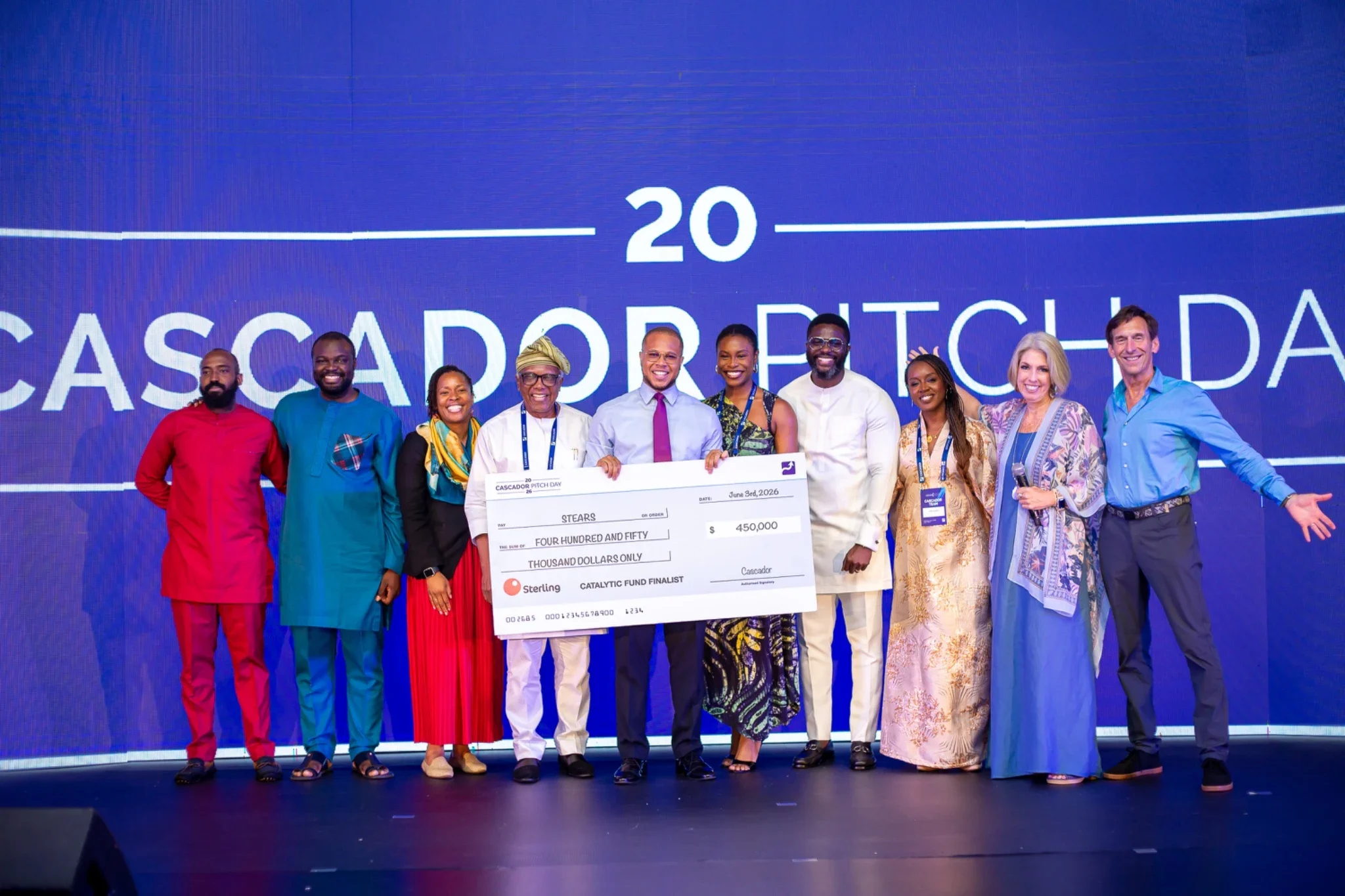
If you’re a Ghanaian founder thinking about acceleration programs, you’ve probably heard of Y Combinator (YC). But there’s a newer option gaining traction across Africa that might be a better fit: Cascador, which just announced $5 million in funding to seven startups at its Pitch Day 2026 in Lagos.
Here’s what you need to know about how Cascador differs from YC and why it might matter for your business.
What is Cascador and how does it work?
Cascador is an acceleration program for growth-stage African startups. Unlike YC’s 3-month intensive in Silicon Valley, Cascador runs a 12-week program that concludes with a Pitch Day where companies pitch to investors for funding.
Since 2019, the program has supported 70 companies that have collectively raised more than $125 million (~GHS 1.4 billion). This year’s Pitch Day, held on June 3, 2026, brought together over 300 investors, media, and ecosystem players in Lagos.
Cascador accelerator vs YC: The key differences
Flexible funding, not a fixed deal. YC’s standard offer is $500,000 USD for 7% equity. Cascador doesn’t have a one-size-fits-all deal. Instead, it uses a $5 million Catalytic Fund that tailors financing to what your business actually needs: equity, debt, guarantees, or collateral support. This matters because not every startup needs to give up equity. A growing agricultural business or hardware company might benefit more from a loan than a stake sale.
Alumni can pitch again, but not all current participants pitch. YC’s Demo Day showcases only the latest batch. Cascador’s Pitch Day is different. Alumni from previous cohorts can return to pitch if they’re ready for scale-up capital. This means your relationship with Cascador doesn’t end after 12 weeks, but it also means not everyone in the current batch gets stage time.
Local expertise and support. Cascador partners with Sterling Bank for financing, and its judges and faculty include African investors and operators. YC’s network is global but can feel distant. For a Ghanaian founder, having judges and mentors who understand your market and regulatory environment matters.
Real numbers from 2026
At this year’s Pitch Day, two companies got equity deals: Stears raised $450,000 USD, and Indigenius AI raised $250,000 USD. The remaining five startups received debt financing ranging from $142,000 to $1.7 million USD.
Agriarche, which received the largest funding of ₦2.5 billion (~$1.7 million USD), was from a previous cohort. Founder Deina Mayaki said Cascador helped her refine messaging, adjust funding strategy, and “adapt without defensiveness.”
What should you do?
Applications for Cascador’s 2026 ScaleUp Program are open until June 15, 2026. If you’re a growth-stage founder in Ghana or West Africa with a team and some traction, it’s worth applying. The program is free to join (no equity taken upfront), gives you mentorship and operational support, and offers multiple paths to capital based on your needs, not a template.
Unlike YC, which takes many applications but admits a small percentage, Cascador admits startups that are already showing growth. That selectivity means less prestige globally but potentially more relevant support locally.
Next step: Check if your startup fits the growth-stage profile (some revenue or users, a founding team, clarity on your market). Then visit Cascador’s site or The Condia’s full coverage to apply.


Leave a Reply