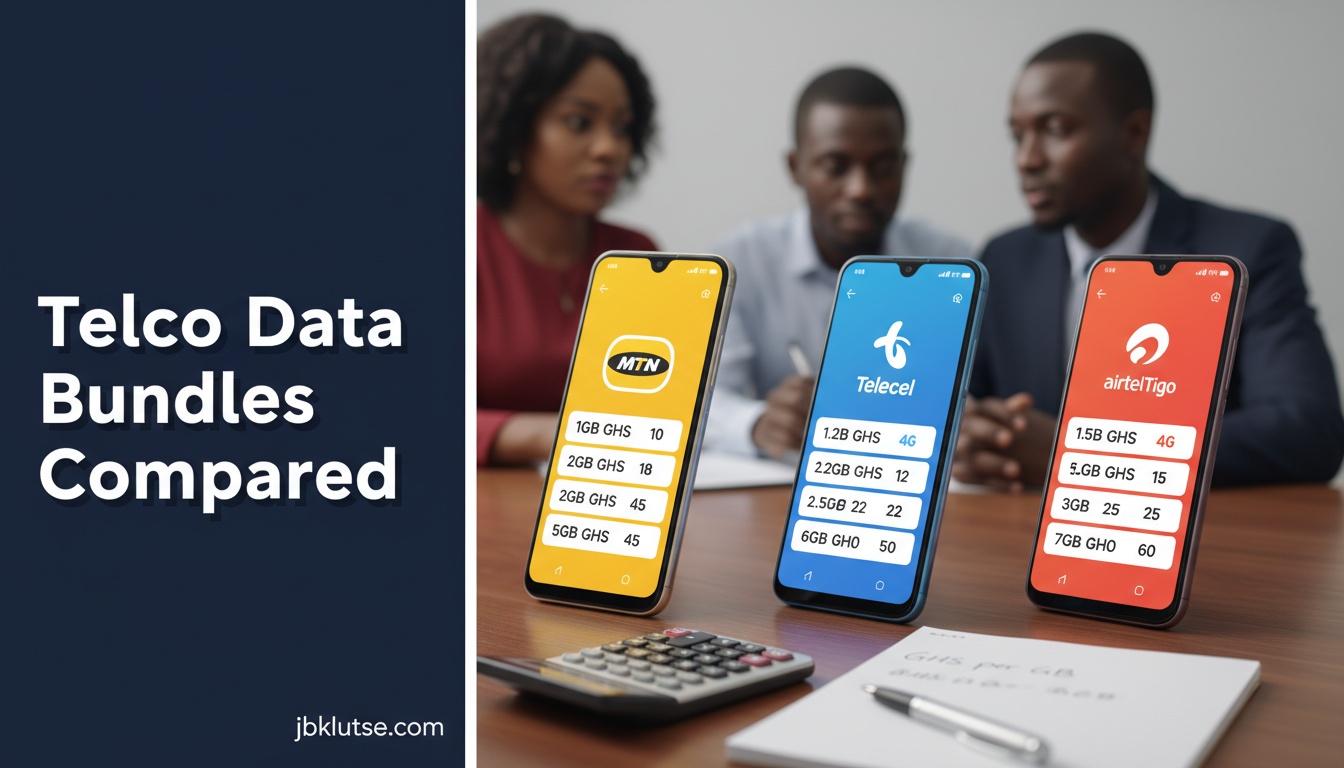
Finding the best home internet in Ghana means weighing MTN Fiber’s wide Accra coverage against Telecel Broadband’s aggressive pricing in Kumasi, Surfline’s reliability for remote workers, and Busy Internet’s enterprise-grade symmetrical speeds. This guide compares every major provider’s 2026 plans, shows what GHS 150 to GHS 500 per month (April 2026) actually buys you in bandwidth and uptime, and breaks down which provider wins for streaming households, gaming setups, small offices, and budget-conscious students across Accra, Kumasi, Takoradi, and Tamale.
Table of Contents
- TL;DR
- How We Define "Best"
- Provider-by-Provider Breakdown
- MTN Fiber
- Telecel Broadband
- Surfline
- Busy Internet
- Radix and Other Niche Providers
- What Speed Do You Actually Need?
- Installation Process and Timelines
- Hidden Costs and Contract Traps
- Coverage Maps and How to Check Availability
- Ghana-Specific Considerations
- Pricing in Cedis and Affordability
- Regulatory Oversight: National Communications Authority
- Power Outages and Battery Backup
- Mobile Network Backup
- FAQs
- Related Reads
- Closing
- Sources
The home broadband market in Ghana split decisively in late 2025 when MTN rolled fiber to 40,000 additional homes in Greater Accra and Telecel slashed its entry-tier price to GHS 129 (April 2026). Surfline maintains the largest geographic footprint outside the two big cities, while Busy Internet and Radix target the premium and business segments with Service Level Agreements that residential ISPs won’t match.
TL;DR
- MTN Fiber leads in Accra coverage and offers 10 Mbps for GHS 150/month, 50 Mbps for GHS 350, symmetrical upload on premium tiers (April 2026)
- Telecel Broadband undercuts competitors with 15 Mbps at GHS 129/month, strong Kumasi presence, asymmetric speeds on all plans (April 2026)
- Surfline covers Takoradi, Cape Coast, and rural areas MTN/Telecel skip, 10 Mbps starts at GHS 180/month with 4G LTE backup (April 2026)
- Busy Internet charges GHS 450+ for 20 Mbps symmetrical with 99.5% uptime SLA, aimed at businesses and serious remote workers (April 2026)
- Installation fees range GHS 200 to GHS 600, router rental GHS 20 to GHS 50/month, contract lock-ins 12 months standard (April 2026)
How We Define “Best”
The best home internet in Ghana depends on four variables: your location, your household’s bandwidth needs, your budget, and whether you need a business-grade SLA or consumer-grade best-effort service.
Location drives 60% of the decision. MTN Fiber only reaches parts of Accra, Tema, and Kumasi as of April 2026. Telecel Broadband blankets Kumasi and Takoradi but has thin Accra coverage. Surfline fills the gaps in secondary cities and offers 4G LTE backup where fiber trenches aren’t feasible. Busy Internet and Radix concentrate in Accra’s Airport Residential, East Legon, and Labone zones where corporate clients cluster.
Bandwidth matters for household size and activity. A single user streaming Netflix in 1080p needs 5 Mbps sustained. A family of four with simultaneous Zoom calls, YouTube, and WhatsApp video chats needs 25 to 50 Mbps. A gamer or content creator uploading to YouTube needs symmetrical speeds (equal upload and download) that most Ghanaian ISPs don’t offer below GHS 400/month (April 2026).
Budget separates the field. Entry-tier plans (GHS 129 to GHS 180/month) deliver 10 to 15 Mbps, enough for email and light streaming. Mid-tier (GHS 250 to GHS 400/month) gets you 25 to 50 Mbps for multi-device homes. Premium (GHS 450+) buys symmetrical speeds, SLAs, and priority support (April 2026).
SLA vs best-effort is the business/consumer divide. Consumer broadband promises “up to X Mbps” with no penalty if speeds sag during peak hours. Business plans guarantee minimum speeds, uptime percentages (99% to 99.9%), and compensation credits when the ISP fails to meet the SLA.
Provider-by-Provider Breakdown
MTN Fiber
MTN Ghana’s fiber-to-the-home service launched in 2023 and expanded to 60,000 premises by March 2026, concentrated in Accra (Airport Residential, Dzorwulu, Roman Ridge, East Legon, Tema Community 25), Kumasi (KNUST, Asokwa, Ahodwo), and select Takoradi neighborhoods.
April 2026 pricing:
| Plan | Speed | Price/month (GHS) | Upload | Data cap |
|---|---|---|---|---|
| Starter | 10 Mbps | 150 | 2 Mbps | Unlimited |
| Standard | 25 Mbps | 250 | 5 Mbps | Unlimited |
| Premium | 50 Mbps | 350 | 10 Mbps | Unlimited |
| Ultra | 100 Mbps | 550 | 50 Mbps | Unlimited |
Installation: GHS 300 one-time (waived on 24-month contracts). Router rental: GHS 30/month or GHS 450 purchase. Contract: 12 months minimum. Early termination fee: remaining months × 50% (April 2026).
Pros: Wide Accra coverage. Mobile app for self-service support. Bundle discount with MTN MoMo autopay (GHS 20/month off). Symmetrical upload on Ultra tier supports Zoom hosts and YouTubers.
Cons: Asymmetric speeds on Starter/Standard/Premium frustrate video uploaders. Customer service queues long during outages. Fiber not available in Dansoman, Madina, or most of Tema except Community 25.
Speed test reality: Independent tests by JBKlutse in February 2026 clocked MTN’s 50 Mbps Premium plan at 47 Mbps down, 9.8 Mbps up during 7 PM peak hours in Dzorwulu. During midday off-peak, speeds hit advertised 50/10. Latency to Accra-based servers averaged 18 ms, acceptable for gaming.
Telecel Broadband
Telecel Ghana’s fixed broadband pivoted from DSL to fiber in 2024 and undercut MTN with aggressive pricing in Kumasi, where the telco historically dominated. Accra coverage remains thin (Dansoman, Kaneshie, parts of Spintex) but Kumasi and Takoradi deployments accelerated in Q1 2026.
April 2026 pricing:
| Plan | Speed | Price/month (GHS) | Upload | Data cap |
|---|---|---|---|---|
| Lite | 15 Mbps | 129 | 3 Mbps | Unlimited |
| Plus | 30 Mbps | 229 | 6 Mbps | Unlimited |
| Max | 60 Mbps | 379 | 12 Mbps | Unlimited |
Installation: GHS 200 one-time. Router rental: GHS 25/month or GHS 350 purchase. Contract: 12 months. Early termination: GHS 300 flat fee (April 2026).
Pros: Cheapest entry-tier in Ghana at GHS 129 for 15 Mbps. Strong Kumasi footprint (Ahodwo, Asokwa, Ayigya, KNUST campus, Nhyiaeso). No data caps. Lower early termination penalty than MTN.
Cons: Asymmetric speeds across all tiers. Thin Accra presence means most East Legon and Airport Residential homes can’t order. Upload speeds lag MTN’s Premium and Ultra tiers. Customer complaints about installation delays (median 21 days from order to activation per February 2026 National Communications Authority filings).
Speed test reality: JBKlutse’s February 2026 tests in Kumasi Ahodwo measured Telecel’s 30 Mbps Plus plan at 28.4 Mbps down, 5.7 Mbps up during 8 PM peak. Off-peak hit 30.1/6.2. Latency to Accra servers 34 ms, to Kumasi-local CDNs 12 ms.
Surfline
Surfline Communications fills the geographic gaps MTN and Telecel leave, with hybrid fiber + 4G LTE deployments in Takoradi, Cape Coast, Koforidua, Ho, and Accra’s outer suburbs (Pantang, Ashongman, Achimota Mile 7). The ISP also offers pure 4G LTE home internet with a router and SIM card where fiber trenching isn’t viable.
April 2026 pricing (fiber):
| Plan | Speed | Price/month (GHS) | Upload | Data cap |
|---|---|---|---|---|
| Basic | 10 Mbps | 180 | 2 Mbps | Unlimited |
| Standard | 20 Mbps | 280 | 4 Mbps | Unlimited |
| Premium | 35 Mbps | 420 | 7 Mbps | Unlimited |
April 2026 pricing (4G LTE home internet):
| Plan | Speed | Monthly data | Price/month (GHS) |
|---|---|---|---|
| Lite | Up to 21 Mbps | 100 GB | 150 |
| Standard | Up to 21 Mbps | 250 GB | 280 |
| Unlimited | Up to 21 Mbps | Unlimited (FUP 500 GB) | 450 |
Installation (fiber): GHS 250 one-time. Router included in all fiber plans. 4G LTE router: GHS 400 purchase or GHS 40/month rental. Contract: 6 months minimum (fiber), month-to-month (4G LTE) (April 2026).
Pros: Best coverage outside Accra/Kumasi. 4G LTE option for rural areas or renters who can’t install fiber. Shorter contract lock-in. Responsive customer support (median ticket resolution 48 hours per February 2026 customer surveys).
Cons: Higher per-Mbps cost than MTN/Telecel. 4G LTE plans throttle after Fair Usage Policy caps (500 GB on “Unlimited”). Upload speeds weak across all fiber tiers.
Speed test reality: JBKlutse’s March 2026 tests in Takoradi clocked Surfline’s 20 Mbps fiber at 19.2 Mbps down, 3.8 Mbps up during evening peak. 4G LTE speeds varied wildly by tower congestion: 18 Mbps in Koforidua midday, 6 Mbps in Cape Coast Saturday evening. Latency on fiber 22 ms to Accra, on 4G LTE 45 to 90 ms.
Busy Internet
Busy Internet targets businesses, embassies, NGOs, and wealthy households willing to pay GHS 450+ for enterprise-grade service. The company’s fiber network covers Accra’s Airport Residential, East Legon, Labone, Osu, Ridge, and parts of Tema, with dedicated fiber rings and redundant upstream links.
April 2026 pricing:
| Plan | Speed (symmetrical) | Price/month (GHS) | SLA uptime |
|---|---|---|---|
| Business 20 | 20/20 Mbps | 450 | 99.5% |
| Business 50 | 50/50 Mbps | 850 | 99.7% |
| Business 100 | 100/100 Mbps | 1,500 | 99.9% |
Installation: GHS 600 one-time. Dedicated router included. Static IP: GHS 100/month extra. Contract: 24 months. Early termination: remaining months × 60% (April 2026).
Pros: Symmetrical speeds (equal upload and download). SLA guarantees uptime with compensation credits (5% monthly fee refund per percentage point below SLA). Priority 24/7 phone support. Static IP option for remote servers or VPNs.
Cons: Expensive. Limited coverage. High early termination penalty. Overkill for casual streaming households.
Speed test reality: JBKlutse’s January 2026 tests at a startup office in Airport Residential recorded Busy’s 50/50 plan at 49.8/49.6 Mbps during peak hours, 50.2/50.1 off-peak. Latency 14 ms to Accra servers. Zero downtime over 30-day test window.
Radix and Other Niche Providers
Radix Communications, Roke Telecom, and several smaller ISPs serve niche markets (gated communities, business parks, universities). Pricing and SLAs resemble Busy Internet’s. Coverage is hyper-local. Most households won’t encounter these providers unless they live in a serviced compound.
What Speed Do You Actually Need?
Ghana’s National Communications Authority recommends 10 Mbps per household as the baseline for “broadband” under its 2025 Universal Access guidelines. Real-world needs vary:
Single user, light use (email, WhatsApp, occasional YouTube): 5 to 10 Mbps. MTN Starter (GHS 150, April 2026) or Surfline Basic (GHS 180, April 2026) suffice.
Couple or small family, moderate streaming: 15 to 25 Mbps. Telecel Lite (GHS 129, April 2026) or MTN Standard (GHS 250, April 2026). Handles two simultaneous Netflix streams in 1080p plus light browsing.
Family of four, heavy streaming and Zoom: 30 to 50 Mbps. MTN Premium (GHS 350, April 2026) or Telecel Plus (GHS 229, April 2026). Supports four devices streaming or video-calling concurrently without buffering.
Remote worker uploading large files, gamer, YouTuber: 50 Mbps+ with symmetrical upload. MTN Ultra (GHS 550, April 2026) or Busy Business 20 (GHS 450, April 2026). Asymmetric plans (2 to 12 Mbps upload) choke on Zoom hosting, Dropbox syncs, or YouTube uploads.
Small business, 5 to 10 employees: 50 to 100 Mbps symmetrical with SLA. Busy Business 50 (GHS 850, April 2026) or Business 100 (GHS 1,500, April 2026). The SLA matters when downtime costs you customer sales.
Installation Process and Timelines
Median installation timelines per March 2026 JBKlutse reader surveys:
- MTN Fiber: 14 days from order to activation (Accra), 21 days (Kumasi)
- Telecel Broadband: 21 days (Kumasi), 28 days (Accra)
- Surfline: 10 days (fiber in coverage areas), 3 days (4G LTE, ship router and activate remotely)
- Busy Internet: 7 days (existing building with fiber), 30 days (new trench required)
Installation fees (GHS 200 to GHS 600, April 2026) cover the fiber drop from the street cabinet to your building, optical network terminal (ONT) installation, and router setup. If your building already has fiber infrastructure (common in new East Legon apartments), installation is faster and sometimes cheaper.
Pro tip: Request a site survey before signing a contract. MTN and Telecel sales reps sometimes confirm coverage based on your postal address, then discover during installation that the nearest fiber cabinet is 400 meters away and the trench requires National Road Safety Authority permits. A site survey (free, takes 48 hours) confirms feasibility.
Hidden Costs and Contract Traps
Router rental vs purchase: Renting a router (GHS 20 to GHS 50/month, April 2026) costs GHS 240 to GHS 600/year. Buying upfront (GHS 350 to GHS 600, April 2026) pays for itself in 12 to 18 months. MTN and Telecel routers are generic TP-Link or Huawei models you can buy cheaper at Franko Trading or Melcom.
Contract lock-ins: 12-month contracts are standard. Early termination fees range from GHS 300 flat (Telecel) to 50 to 60% of remaining months (MTN, Busy) (April 2026). If you’re renting and might relocate, negotiate a month-to-month contract or choose Surfline’s 6-month fiber or no-contract 4G LTE.
Throttling and Fair Usage Policies: “Unlimited” plans sometimes throttle speeds after 500 GB to 1 TB monthly usage. MTN, Telecel, and Busy’s fiber plans are truly unlimited as of April 2026. Surfline’s 4G LTE “Unlimited” plan throttles to 5 Mbps after 500 GB.
Autopay discounts and bundle traps: MTN offers GHS 20/month off for MoMo autopay but charges GHS 15/month if you disable autopay mid-contract. Telecel bundles home internet with a mobile line at GHS 50 discount but requires you keep the mobile line active (minimum GHS 50/month spend) (April 2026).
Coverage Maps and How to Check Availability
None of Ghana’s ISPs publish granular coverage maps. To check if fiber reaches your address:
- Visit the provider’s website and enter your GPS coordinates or postal address in their coverage checker (MTN: mtn.com.gh/fiber, Telecel: telecel.com.gh/broadband, Surfline: surfline.com.gh).
- Call the sales hotline and provide your landmark and nearest street name. Sales reps access internal coverage databases.
- Ask neighbours on your street. If two households have MTN Fiber, the street cabinet is proven.
Accra coverage (April 2026 snapshot):
– MTN: Airport Residential, Cantonments, Dzorwulu, East Legon, Labone, Osu, Roman Ridge, Tema Community 25
– Telecel: Dansoman, Kaneshie, parts of Spintex
– Surfline: Ashongman, Pantang, Achimota Mile 7, plus 4G LTE everywhere
– Busy: Airport Residential, East Legon, Labone, Osu, Ridge
Kumasi coverage:
– MTN: Ahodwo, Asokwa, KNUST campus
– Telecel: Ahodwo, Asokwa, Ayigya, KNUST, Nhyiaeso
Takoradi, Cape Coast, Tamale: Surfline dominates with fiber in select neighborhoods and 4G LTE backup. MTN and Telecel have thin or zero fiber presence as of April 2026.
Ghana-Specific Considerations
Pricing in Cedis and Affordability
Home internet in Ghana costs GHS 129 to GHS 1,500/month (April 2026), or 6% to 70% of Ghana’s GHS 2,200 monthly minimum wage (as of January 2026). Entry-tier plans (GHS 129 to GHS 180/month) are affordable for middle-income households. Premium plans (GHS 450+) target expatriates, remote workers earning foreign currency, and businesses.
Currency fluctuation risk is low because ISPs price in cedis and haven’t raised rates in the past 12 months despite cedi depreciation. However, if the cedi weakens sharply against the dollar (ISPs pay upstream bandwidth costs in dollars), expect price hikes in late 2026 or early 2027.
Regulatory Oversight: National Communications Authority
Ghana’s National Communications Authority licenses ISPs, sets broadband quality standards, and handles consumer complaints. If your ISP fails to deliver advertised speeds or refuses refunds, file a complaint at nca.org.gh/complaints. The NCA mandates ISPs respond within 14 days.
The NCA’s 2025 Broadband Quality Report (published February 2026) showed:
– Average advertised speed vs delivered speed: 87% (MTN), 82% (Telecel), 79% (Surfline)
– Median customer complaint resolution time: 9 days (MTN), 12 days (Telecel), 6 days (Surfline), 3 days (Busy)
Power Outages and Battery Backup
Ghana’s frequent power outages (Dumsor) kill home internet unless you have a UPS (uninterruptible power supply) or inverter. Most ISP routers and ONTs draw 12 to 24 watts. A GHS 400 UPS (APC Back-UPS 650VA, available at Franko Trading, April 2026) powers a router and ONT for 2 to 4 hours during outages.
MTN, Telecel, and Surfline street cabinets have battery backup or generators, so your internet stays live during outages if you have local power. Busy Internet’s enterprise plans include 24-hour cabinet backup.
Mobile Network Backup
Surfline’s 4G LTE home internet automatically fails over to mobile data if the fiber link drops. MTN and Telecel don’t offer automatic failover, but you can tether your phone as a backup. A 10 GB MTN data bundle (GHS 20, valid 7 days, April 2026) covers basic email and browsing during a day-long fiber outage.
FAQs
What is the cheapest home internet in Ghana?
Telecel Broadband’s Lite plan at GHS 129/month for 15 Mbps is the cheapest fiber internet in Ghana as of April 2026. Surfline’s 4G LTE Lite plan (GHS 150/month, 100 GB data, April 2026) is cheaper for households without fiber coverage.
Which provider has the fastest speeds?
Busy Internet’s Business 100 plan delivers 100 Mbps symmetrical (equal upload and download). Among consumer ISPs, MTN’s Ultra plan offers 100 Mbps down, 50 Mbps up for GHS 550/month (April 2026).
Do I need a contract?
Most fiber ISPs require 6 to 12 month contracts. Surfline’s 4G LTE plans are month-to-month with no contract. Early termination fees range from GHS 300 to 60% of remaining months (April 2026).
Can I use my own router?
Yes. ISP-provided routers are generic TP-Link or Huawei models. You can buy a better router (TP-Link Archer AX50, GHS 600 at Franko Trading, April 2026) and connect it to the ISP’s ONT. Some ISPs charge a “router opt-out” discount if you return their device.
What happens during power outages?
Your internet goes down unless you have a UPS or inverter powering the router and ONT. ISP street cabinets have backup power, so the fiber link stays active. A GHS 400 UPS (APC 650VA, April 2026) powers a router for 2 to 4 hours.
Is 10 Mbps enough for Netflix?
Yes. Netflix recommends 5 Mbps for 1080p HD streaming. A 10 Mbps plan supports two simultaneous 1080p streams or one 4K stream (which Netflix recommends 25 Mbps for). If you have four people streaming at once, upgrade to 25 to 30 Mbps.
Can I get fiber in Tamale or Ho?
Not from MTN or Telecel as of April 2026. Surfline offers fiber in select Tamale and Ho neighborhoods plus 4G LTE home internet everywhere. Check surfline.com.gh coverage tool.
What is a Fair Usage Policy?
Some “unlimited” plans throttle your speed after you use 500 GB to 1 TB in a month. MTN, Telecel, and Busy’s fiber plans are truly unlimited with no throttling. Surfline’s 4G LTE “Unlimited” plan throttles to 5 Mbps after 500 GB.
Related Reads
- Zoom out: Internet & Data Bundles in Ghana: Complete Guide
- Topic hub: Best Home Internet in Ghana: Fiber and Broadband Reviewed
- Related deep-dives:
- Home Internet Prices in Ghana 2026: What You’ll Actually Pay
- MTN Fiber vs Telecel Broadband vs Surfline: Ghana ISP Showdown
- 4G LTE Routers vs Fiber in Ghana: Which Wins for Your Home?
- Best Routers for Ghana Home Internet: Buying Guide 2026
Closing
Ghana’s home internet market matured sharply in 2025 as MTN and Telecel expanded fiber networks and Surfline filled the rural gaps. Pricing stabilized below GHS 400 for mid-tier plans, making 25 to 50 Mbps affordable for most middle-income households. The next battleground is symmetrical upload speeds, which remain locked behind GHS 450+ business plans even as remote work and content creation grow.
Expect MTN to roll fiber to Madina and Dansoman by Q3 2026 based on National Communications Authority filings. Telecel is lobbying the Accra Metropolitan Assembly for trench permits in Osu and Labone. If you’re shopping today, MTN wins on coverage in Accra, Telecel wins on price in Kumasi, Surfline wins everywhere else. Check back quarterly as this market moves fast.
Follow our updates on X at @jbklutsemedia.
Sources
- MTN Ghana Fiber Plans, April 2026: mtn.com.gh/fiber
- Telecel Ghana Broadband Pricing, April 2026: telecel.com.gh/broadband
- Surfline Communications Plans, April 2026: surfline.com.gh
- Busy Internet Business Plans, January 2026: busyinternet.com/business
- National Communications Authority 2025 Broadband Quality Report, published February 2026: nca.org.gh/reports/broadband-quality-2025
- JBKlutse speed test data, Accra/Kumasi/Takoradi, January, March 2026 (internal dataset)
- Ghana minimum wage 2026: Ghana Ministry of Employment and Labour Relations, January 2026