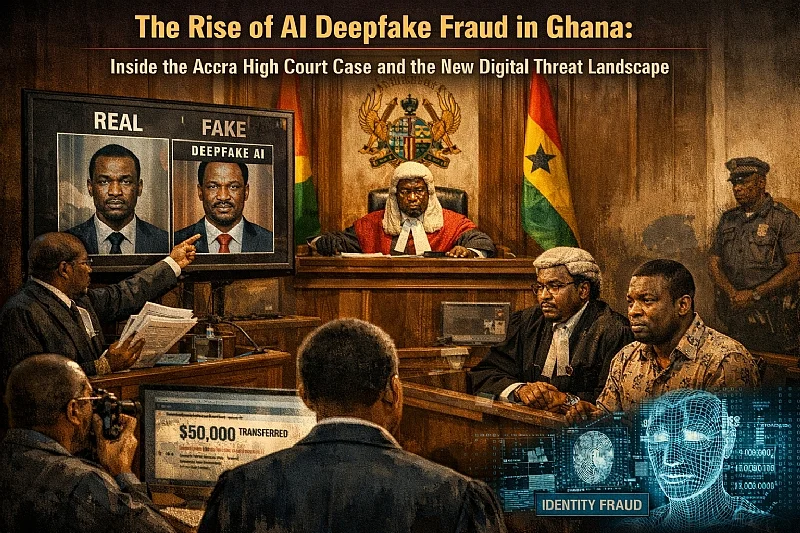
Five people have been arrested and brought before the Accra High Court, accused of using artificial intelligence to impersonate Ghana’s President and other high-profile figures to commit fraud. This is not a movie plot. It happened in Ghana, and it highlights a serious problem: we are not ready for this kind of digital crime.
What does this mean for you? If you can be fooled by a fake video or voice of someone you trust, criminals can steal your money or your personal information. That is the real threat.
What Is Deepfake Fraud?
Deepfake is AI technology that creates fake videos, audio, or images of real people. A criminal can make it look like your bank manager, the President, or your boss said something they never said.
Here is how it works in simple steps:
- Collect. Fraudsters gather videos, voice recordings, and photos from social media, news clips, and interviews.
- Train. They feed this data into AI software that learns how the person speaks, moves, and looks.
- Create. The AI generates fake video messages or voice notes that look and sound real.
- Trick. They send the fake video to victims, usually with an urgent message: “Send money now” or “Confirm your account details.”
The scary part? You do not need a Hollywood studio anymore. A laptop, some free software, and internet access are enough.
What Happened in the Accra Case?
The five suspects allegedly used deepfake technology to impersonate President John Dramani Mahama, former First Lady Lordina Mahama, and other public figures. According to reports, they targeted victims with online scams.
Details are still confidential because the case is ongoing in court. But here is what we know:
- Victims were tricked by fake videos or voice messages that appeared to come from trusted leaders.
- The fraudsters used social engineering, which means they played on psychology: urgency, authority, and fear.
- According to cybercrime experts, cases like this are typically uncovered through digital forensic tracking and monitoring of suspicious financial flows.
Many victims have not come forward publicly because they are embarrassed or afraid. This is typical in fraud cases.
How to Protect Yourself
Do not trust videos or voice messages alone. Even if a message looks like it came from your bank, the President, or your boss, verify it through an official phone number or email address.
Be suspicious of urgency. Real institutions do not demand money or sensitive information immediately. If a message says “act now,” pause and verify.
Check the source. Call the person or organization directly using a number you know is real, not one in the message.
Do not send money to accounts you cannot verify. Even if a voice sounds exactly like someone you trust, confirm the request through another channel first.
Keep your data private. Do not post long videos of yourself online. The more footage of you exists, the easier it is to create a deepfake.
What Ghana Needs to Do
Experts say the problem is not just about technology. It is also about human behavior. Ghanaians need better education on how to spot fake content.
The government should also:
- Strengthen cybercrime laws with clearer penalties for deepfake fraud.
- Invest in AI detection tools to identify fake videos and audio before they spread.
- Teach digital literacy in schools so young Ghanaians grow up understanding these threats.
Right now, public awareness is Ghana’s weakest defense against deepfake fraud.
What You Should Watch
As this court case unfolds, pay attention to how our legal system handles a crime that is brand new. There are no existing laws in Ghana specifically written for deepfake fraud, which makes this trial important.
In the meantime, stay skeptical. If something seems off about a video or message, it probably is. Slow down. Verify. Do not assume digital content is real just because it looks real.
In the digital age, seeing is no longer believing. Your own judgment is your best defense.



Leave a Reply