The leading fintech startups in Ghana are building payment infrastructure, mobile money integrations, and credit products that process billions of cedis annually and serve millions of Ghanaians who never touched a bank branch. This profile covers the 12 companies defining Ghana’s fintech scene in 2026, what they’ve raised, what they’re building, and which problems they’re solving for traders in Makola, drivers on Uber, and salaried workers trying to save or borrow.
Table of Contents
- TL;DR
- Payment Infrastructure and Aggregation
- Zeepay
- ExpressPay
- Hubtel
- Digital Lending and Credit
- Fido
- Aya Finance (formerly Oze)
- Asaase
- Mobile Money and Wallets
- Zeepay (detailed above under Payment Infrastructure)
- DreamPay
- Remittances and Cross-Border Payments
- Wigal
- Swype
- Insurance and Wealth Management
- Brolly
- Earnipay Ghana
- Business Tools and Banking
- Dash (formerly OneBanc)
- Paystack Ghana (Stripe-acquired)
- Ghana-Specific Considerations
- FAQs
- Related Reads
- Closing
- Sources
Ghana’s fintech sector attracted over USD 150 million (~GHS 1.66 billion at April 2026 rates) in venture funding between 2020 and 2025, with startups tackling mobile money interoperability, last-mile payments, credit scoring, insurance, and cross-border remittances. The Bank of Ghana’s regulatory sandbox and the Ghana Interbank Payment and Settlement Systems (GhIPSS) instant pay rails have created an environment where startups can test, scale, and integrate with telcos and banks.
TL;DR
- Ghana has 12+ fintech startups with Series A funding or higher, focused on payments, lending, and mobile money
- Zeepay and ExpressPay lead in payment processing volume, handling GHS 10+ billion annually (April 2026)
- Fido and Aya Finance dominate the digital lending space, serving formal and informal sector workers
- Hubtel’s Merchant Pay and USSD products power 40,000+ Ghanaian businesses
- Most startups raised between USD 2 million (~GHS 22.2 million at April 2026 rates) and USD 15 million (~GHS 166 million at April 2026 rates), with Zeepay crossing the USD 30 million (~GHS 333 million at April 2026 rates) mark in 2024
Payment Infrastructure and Aggregation
Zeepay
Founded in 2015, Zeepay operates Ghana’s largest mobile money aggregation platform. The company processes payments across MTN MoMo, Telecel Cash, and AirtelTigo Money, handling over GHS 12 billion in transaction value in 2025 (April 2026). Zeepay raised USD 31 million (~GHS 344 million at April 2026 rates) in Series B funding in October 2024 led by Oikocredit and Goodwell Investments.
The platform connects 25,000+ merchants, 8,000+ agents, and 4 million active wallets. Zeepay’s API enables businesses to collect payments via mobile money without signing separate agreements with each telco. Clients include ECG (for prepaid meter top-ups), Surfline, and universities like UG and KNUST for tuition payments.
Key products: MoMo aggregation API, agent banking network, cross-border remittances (Ghana-Nigeria-Togo).
ExpressPay
ExpressPay runs one of Ghana’s oldest payment gateways, founded in 2008. The company handles card payments, mobile money collections, and bank transfers for over 15,000 merchants. ExpressPay processed GHS 8.4 billion in 2025 (April 2026), split 60% mobile money and 40% cards.
The platform integrates with all Ghanaian banks, Visa, Mastercard, and the three telco mobile money services. ExpressPay’s checkout is embedded in airline booking sites, e-commerce stores like Jumia Ghana, utility bill payment portals, and government payment systems (DVLA, Passport Office, GRA).
Funding history: Bootstrapped until 2022, raised USD 5 million (~GHS 55.5 million at April 2026 rates) Series A from Oikocredit in 2023.
Hubtel
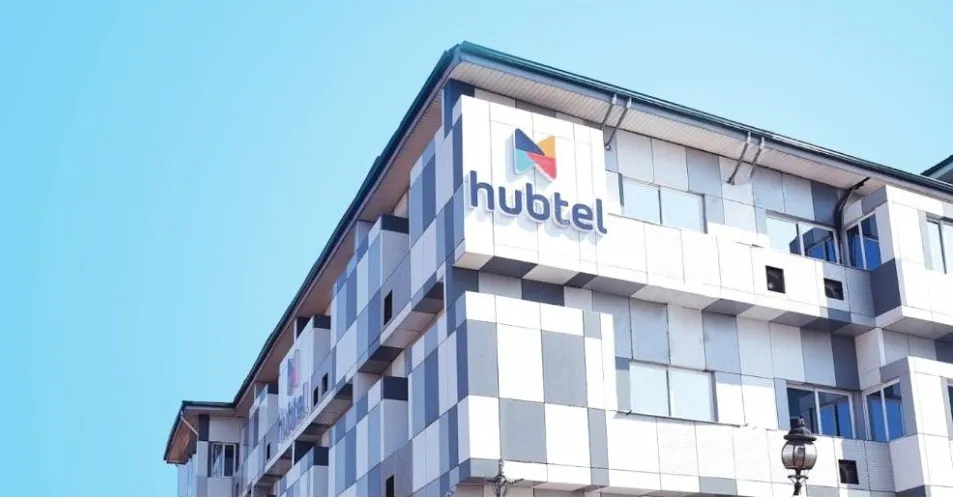
Hubtel started in 2005 as a bulk SMS provider and evolved into a full-stack fintech serving 40,000+ Ghanaian SMEs. The company’s products include:
- Merchant Pay: POS terminals and QR code payments linked to mobile money wallets
- USSD Gateway: Short codes for businesses to offer mobile money payment options
- HubtelPay: Online checkout for e-commerce
- HubtelPOS: Android-based POS devices sold at GHS 450 (April 2026) with zero monthly fees
Hubtel processes GHS 6 billion annually (April 2026), mostly from retail stores, restaurants, and market traders. The company raised USD 5.8 million (~GHS 64.3 million at April 2026 rates) in Series A funding in 2021 from Goodwell Investments. Hubtel’s devices are sold through MTN and Vodafone Ghana retail stores.
Digital Lending and Credit
Fido
Fido is Ghana’s largest digital lender by customer base, serving 800,000+ active borrowers as of December 2025. Founded in 2015 as a microfinance app, Fido offers instant loans from GHS 50 to GHS 10,000 (April 2026) with repayment tenors from 7 days to 12 months.
The company uses mobile money transaction data, telco airtime top-up patterns, and USSD activity to score borrowers who lack traditional credit histories. Fido’s interest rates range from 5% to 15% per month depending on loan size and borrower score. Total loan book: GHS 420 million as of Q4 2025 (April 2026).
Funding: Raised USD 30 million (~GHS 333 million at April 2026 rates) Series B in March 2024 led by Goodwell Investments and Women’s World Banking Capital Partners. Fido operates under Bank of Ghana’s Money Lenders Act license.
Aya Finance (formerly Oze)
Aya Finance provides working capital loans to informal sector traders, market women, and micro-retailers. The app combines business accounting tools with credit access. Users record daily sales and expenses in the app, and Aya’s algorithm uses that cash flow data to underwrite loans from GHS 500 to GHS 20,000 (April 2026).
The company has disbursed GHS 180 million since 2019 (April 2026) to 45,000 borrowers, with a 91% on-time repayment rate. Interest rates: 8% to 12% per month, no collateral required. Aya raised USD 3.2 million (~GHS 35.5 million at April 2026 rates) seed round in 2022 from Mercy Corps Ventures and Launch Africa Ventures.
Aya operates in Accra, Kumasi, Takoradi, and Tamale. Loan applications are approved within 24 hours and disbursed via mobile money.
Asaase
Asaase offers salary-advance loans to formal sector employees. Employers integrate Asaase’s API into their payroll systems, and employees can request up to 50% of their accrued monthly salary before payday. The advance is deducted automatically from the next paycheck.
Asaase charges a flat fee of 3% per advance (no interest, no rollovers). The company has partnered with 120 Ghanaian employers including MTN Ghana, Stanbic Bank, and several public sector agencies. Total advances disbursed: GHS 85 million since launch in 2021 (April 2026).
Funding: Raised USD 1.5 million (~GHS 16.6 million at April 2026 rates) pre-seed in 2023 from Seedstars Africa Ventures.
Mobile Money and Wallets
Zeepay (detailed above under Payment Infrastructure)
DreamPay
DreamPay offers a non-telco mobile wallet targeting Ghanaians who want to avoid the higher fees charged by MTN MoMo, Telecel Cash, and AirtelTigo Money. Users can open a DreamPay wallet with just a Ghana Card number and phone number, no bank account required.
The wallet supports free peer-to-peer transfers between DreamPay users, bill payments (ECG, water, DStv), and merchant payments via QR codes. Cash-in and cash-out happen through DreamPay’s 2,500 agent network. DreamPay charges GHS 0.50 per cash-out (April 2026) regardless of amount, undercutting telco withdrawal fees by 40% to 60%.
DreamPay has 250,000 active wallets as of March 2026. The company raised USD 2 million (~GHS 22.2 million at April 2026 rates) seed round in 2023 from Microtraction and Launch Africa Ventures.
Remittances and Cross-Border Payments
Wigal
Wigal enables instant Ghana-to-Nigeria and Ghana-to-Togo mobile money transfers. Ghanaians in Accra can send money to family in Lagos or Lomé within 60 seconds using mobile money on both ends, no bank accounts needed.
Wigal’s exchange rates are 2% to 3% better than Western Union or MoneyGram, and the transfer fee is GHS 3 flat per transaction (April 2026) (vs. 5% to 8% at traditional remittance agents). The company processed GHS 420 million in cross-border volume in 2025 (April 2026).
Wigal raised USD 1.8 million (~GHS 20 million at April 2026 rates) seed funding in 2022 from Ventures Platform and Atlantica Ventures. The startup operates under Bank of Ghana’s payment service provider license.
Swype
Swype offers virtual dollar cards for Ghanaians who want to pay for international subscriptions (Netflix, Spotify, Amazon, ChatGPT Plus) without owning a Visa or Mastercard. Users fund their Swype wallet with cedis via mobile money, and Swype issues a virtual USD card that works globally.
The company charges a 4% conversion fee (GHS to USD) plus a USD 1.50/month (~GHS 16.60 at April 2026 rates) card maintenance fee. Swype has issued 18,000 virtual cards since launching in 2024. The startup raised USD 800,000 (~GHS 8.9 million at April 2026 rates) pre-seed in 2023 from angel investors including Ghanaian tech founders.
Insurance and Wealth Management
Brolly
Brolly offers microinsurance products embedded in mobile money wallets. Users can buy daily accident cover for GHS 2, hospital cash for GHS 5 per week, or funeral insurance for GHS 10 per month (April 2026), all paid via MTN MoMo or Telecel Cash.
Brolly partners with traditional insurers (Enterprise Insurance, Hollard) to underwrite policies while handling distribution, premium collection, and claims via USSD and app. The company has sold 120,000 policies since 2022, with claims paid out totaling GHS 8.5 million (April 2026).
Brolly raised USD 2.5 million (~GHS 27.7 million at April 2026 rates) Series A in 2024 from Goodwell Investments. The startup is regulated by the National Insurance Commission (NIC).
Earnipay Ghana
Earnipay offers employees access to earned wages before payday, plus a savings product that locks funds and pays 12% annual interest (vs. 8% to 10% at traditional banks). The company partners with employers to integrate payroll data and disburse advances via mobile money.
Earnipay Ghana launched in 2024 (after starting in Nigeria in 2021) and has signed 35 Ghanaian employers. The company raised USD 4 million (~GHS 44.4 million at April 2026 rates) Series A in 2023 from Canaan Partners Africa.
Business Tools and Banking
Dash (formerly OneBanc)
Dash provides business bank accounts and POS devices for Ghanaian SMEs. The company’s business account links to a Mastercard debit card and integrates with QuickBooks and Xero for automated bookkeeping. Dash charges GHS 15 per month (April 2026) for the account and GHS 300 one-time (April 2026) for the POS terminal.
Dash has onboarded 5,000 businesses since launching in 2023. The company raised USD 2.2 million (~GHS 24.4 million at April 2026 rates) seed round in 2024 from 4DX Ventures and LocalGlobe.
Paystack Ghana (Stripe-acquired)
Paystack, acquired by Stripe in 2020 for USD 200 million (~GHS 2.22 billion at April 2026 rates), offers payment APIs for Ghanaian developers and online businesses. Paystack processes card payments, mobile money, and bank transfers, charging 1.95% plus GHS 1 per transaction (April 2026).
Paystack Ghana handles payments for Jumia, Glovo, and hundreds of Ghanaian e-commerce stores. The platform processed GHS 4.2 billion in Ghana in 2025 (April 2026). Paystack is not venture-backed (Stripe-owned), but remains a key fintech infrastructure player.
Ghana-Specific Considerations
Licensing: All fintechs handling customer funds must register with Bank of Ghana as Payment Service Providers (PSPs) or operate under a banking partner’s license. Digital lenders must comply with the Money Lenders Act and cap interest rates per BoG guidelines (though enforcement is inconsistent as of 2026).
Mobile money dominance: Ghana’s fintech ecosystem is mobile-money-first. MTN MoMo accounts for 65% of mobile money transactions, followed by Telecel Cash at 25% and AirtelTigo Money at 10% (GhIPSS data, Q4 2025). Startups that don’t integrate with mobile money wallets struggle to scale.
GhIPSS instant pay: The Ghana Interbank Payment and Settlement Systems instant pay platform (launched 2019) enables real-time bank-to-mobile-money transfers. Fintechs that integrate with GhIPSS can offer customers bank account funding without the delays of ACH transfers.
Ghana Card as KYC: National Identification Authority’s Ghana Card is now the primary KYC document for fintech account opening. Startups use NIA’s API to verify card numbers, reducing onboarding fraud by 70% compared to manual document checks.
Telco partnerships: Successful fintechs form partnerships with MTN, Telecel, or AirtelTigo to access USSD channels, co-market products, and reduce mobile money transaction fees (from standard 1.5% down to 0.5% to 1% for volume partners).
FAQs
What is the largest fintech startup in Ghana?
Zeepay is the largest by transaction volume, processing over GHS 12 billion annually (April 2026) across its mobile money aggregation platform. By customer base, Fido leads with 800,000 active borrowers using its digital lending app.
How do Ghanaian fintechs make money?
Payment processors earn transaction fees (0.5% to 1.95% per transaction). Digital lenders earn interest (5% to 15% per month). Wallet providers charge cash-out fees or interchange fees from merchant transactions. Some fintechs charge monthly SaaS fees to business customers.
Are fintech loans in Ghana safe to take?
Bank of Ghana regulates digital lenders under the Money Lenders Act, but interest rate caps are not consistently enforced. Borrowers should check that the lender holds a valid BoG license, read all terms before accepting, and avoid loans with effective APRs above 100%. Fido, Aya Finance, and Asaase are licensed and transparent about fees.
Can I use a Ghanaian fintech if I don’t have a bank account?
Yes. Most Ghanaian fintechs are mobile-money-first and do not require a bank account. You need a Ghana Card, a mobile number, and a mobile money wallet (MTN MoMo, Telecel Cash, or AirtelTigo Money). DreamPay, Fido, and Brolly all work without bank accounts.
Which Ghanaian fintech has raised the most funding?
Zeepay raised USD 31 million (~GHS 344 million at April 2026 rates) in Series B (2024), making it the most-funded fintech headquartered in Ghana. Fido raised USD 30 million (~GHS 333 million at April 2026 rates) in Series B (2024), and Paystack (now Stripe-owned) was acquired for USD 200 million (~GHS 2.22 billion at April 2026 rates) in 2020 but is no longer independently venture-backed.
Do Ghanaian fintechs operate in other West African countries?
Yes. Zeepay operates in Nigeria, Togo, and Côte d’Ivoire. Wigal covers Ghana-Nigeria-Togo corridors. Fido has expanded to Uganda and Kenya. Most Ghanaian fintechs focus on Ghana first, then expand regionally after proving product-market fit domestically.
How do I apply for a digital loan from Fido or Aya Finance?
Download the app (Fido or Aya Finance) from Google Play Store, register with your Ghana Card number and phone number, link your mobile money wallet, and complete a short credit questionnaire. First-time borrowers typically qualify for GHS 100 to GHS 500 (April 2026). Loan limits increase with on-time repayment history.
What are the transaction fees for mobile money aggregators?
Zeepay charges merchants 1% per mobile money collection. ExpressPay charges 1.5% for mobile money and 2.5% for card payments. Hubtel charges 1.2% for mobile money via its API. These fees are lower than the 1.75% charged by telcos for direct mobile money merchant payments.
Related Reads
- Zoom out: Startups & VC: West Africa funding, founder profiles, and ecosystem news
- Topic hub: Ghanaian Startups to Watch: ecosystem profiles and deep-dives
- Who raised money: Ghanaian Startups That Raised Funding in 2026
- Valuation leaders: Most Valuable Ghanaian Startups 2026
- Deep profiles: Profiles: mPharma, Zeepay, Hubtel, Farmerline
- Unicorn watch: Does Ghana Have Any Unicorns?
Closing
Ghana’s fintech scene in 2026 is defined by mobile-money-first products, credit access for informal sector workers, and payment infrastructure that connects telcos, banks, and merchants. The next wave of growth will come from embedded finance (insurance, savings, and credit inside non-financial apps), cross-border payments to Nigeria and Togo, and merchant tools that help Ghana’s 2 million+ SMEs accept digital payments and track cash flow.
Zeepay, Fido, Hubtel, and ExpressPay have proven that Ghanaian fintechs can scale to billions of cedis in transaction volume and raise Series A and Series B rounds. The regulatory clarity from Bank of Ghana and GhIPSS infrastructure investment have created a foundation for the next 50 fintechs to build on. Follow our updates on X at @jbklutsemedia.
Sources
- Bank of Ghana Payment Systems Oversight Annual Report 2025: https://www.bog.gov.gh/payment-systems/
- GhIPSS Transaction Volume Data Q4 2025: https://www.ghipss.net/
- Zeepay Series B Announcement October 2024: https://zeepay.africa/press
- Fido Series B Press Release March 2024: https://fidoafrica.com/news
- Oikocredit Investment Portfolio Ghana 2025: https://www.oikocredit.coop/
- Hubtel Annual Report 2025: https://hubtel.com/about
- Launch Africa Ventures Portfolio Companies: https://launchafrica.vc/
- National Insurance Commission Microinsurance Guidelines 2024: https://www.nicgh.org/